
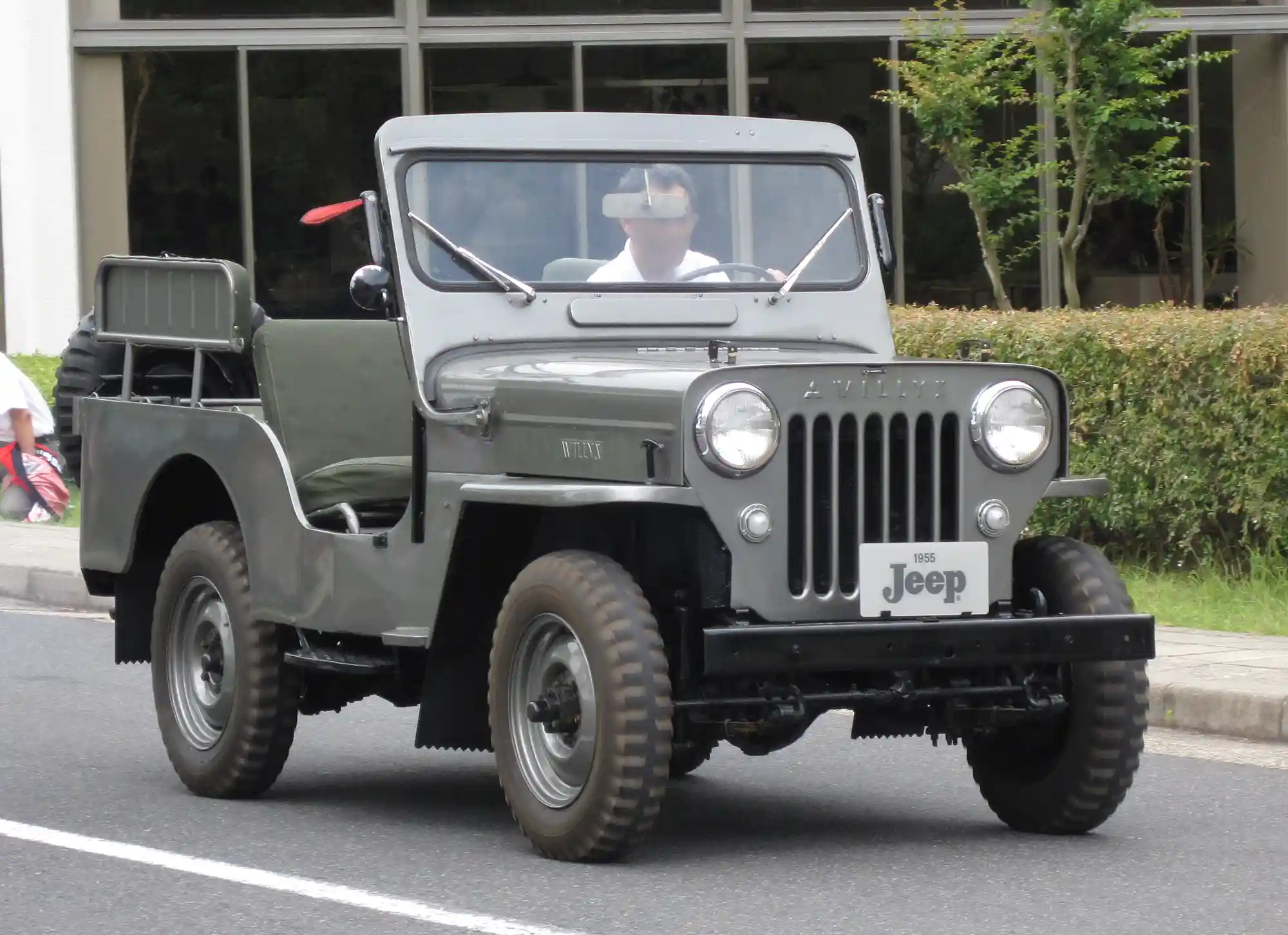
The 60th annual Easter Jeep Safari (EJS) starts this week in Moab, UT, and runs through April 5. We’ve been 15+ times, despite only owning one Jeep, a 2001 Cherokee (XJ). We went multiple times for work, and crashed the party in our Mitsubishi Pajero twice. Buy my ultimate dirty little EJS fantasy? I want to show up in a Mitsubishi Jeep. And yes, you read that right.
What is a Mitsubishi Jeep?
In July 1953, Willys allowed Mitsubishi to market the CJ-3B as the Jeep J3. The CJ-3B is often referred to as a “high hood” Willys, and Mitsubishi built these licensed versions in Japan up until 1998—yes, that’s 45 years. There were approximately 200,000 Mitsubishi Jeeps built, and a variety of bodystyles were made, including short, medium, and long wheelbases, and even wagon body models. Power came from various gas and diesel power plants. Overall, there were about 30 Mitsubishi Jeep variations made.
While at Easter Jeep Safari some time ago, I asked Jeep legend, Rick Péwé, if these Mitsubishis were literally the same as the Willys CJ-3B, to which he responded, “I don’t know. Go get one, and we’ll tear it down and find out.” FYI, this is pretty much the response I’d expect from Rick, whom I’ve known for nearly 20 years.
What Separates a Mitsubishi Jeep From a Willys CJ-3B?
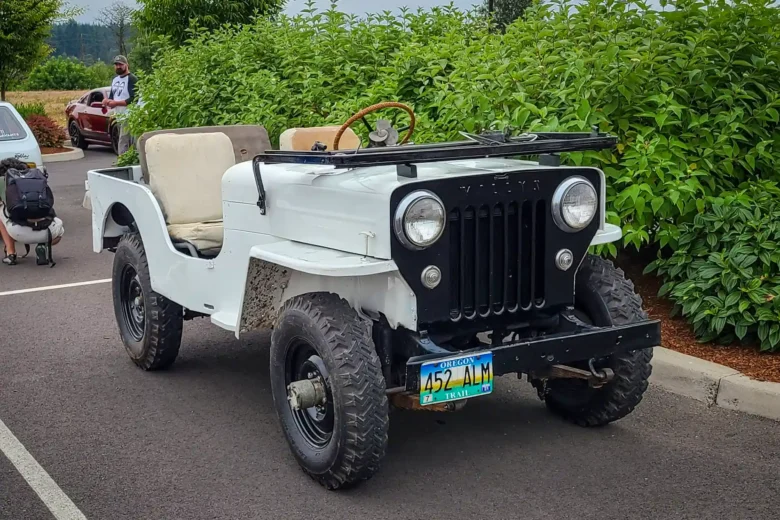
No, I haven’t followed Rick’s advice, and bought one; at least not yet. So what makes a flat-fender Japanese Mitsubishi Jeep different from an American Willys CJ-3B?
First off, the engines. Early versions still used the 2.2-liter F-head Hurricane engine, called the JH4 by Mitsubishi (aka Japanese Hurricane 4-cylinder). The JH4 was made in Japan. A host of other four-cylinder engines were produced over nearly a half-century of production. This includes the 2.0-liter 4G52, the 2.4-liter 4G53; and diesel variants, including the 2.2-liter KE31, and the most common 2.7-liter 4DR5 (naturally aspirated) and 4DR6 (turbodiesel).
Of course, there were specific Japanese domestic market (JDM) features for the home market, including vented windshields, different mirrors, a wider body, and, of course, the Mitsubishi logo atop the trademark Jeep seven-slot grille.
According to Off Road Xtreme, things like 24-volt electrical systems, full-time 4WD, 2.1:1 transfer cases, a Dana 30 front and rear Dana 44 axles with 4.77 gears could be had.
Apparently, despite looking so much like a CJ-3B, relatively few parts are directly interchangeable with U.S.-made Jeeps.
I Want to Take a Mitsubishi Jeep to Easter Jeep Safari Someday
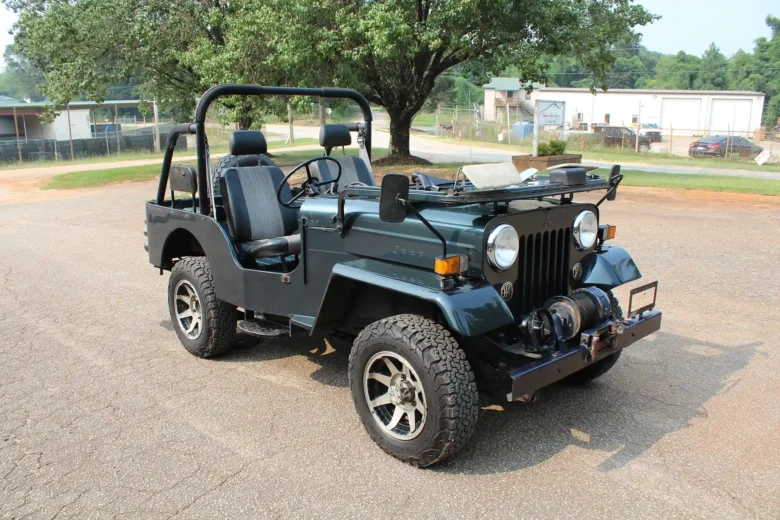
I would absolutely love to show up at EJS someday in a Mitsubishi Jeep, sitting on the right-hand side, 2.7-liter turbodiesel chugging away. I’m sure I’d get some double takes. And as you know, it’s sort of our MO to show up in weird things at events.
We don’t have a tow rig, so getting there might be interesting. I’m told they will cruise down the highway at 60 MPH, but I’m guessing not much more. Theoretically, the drive is doable to Moab from Portland is doable. But we’d be living in the slow lane—something we’re accustomed to anyway.
There aren’t many of these JDM Mitsubishi Jeep models in the USA, but that wouldn’t stop us. There is a small Mitsubishi Jeeps of North America Facebook Group. I know finding JDM Parts for trucks, vans, and SUVs isn’t always easy, but we’ve done it enough with our JDM Mitsubishi Delicas, Pajeros, and now our Suzuki Jimny.
Part of the fun of EJS is going to show off your unique Jeep, and a Mitsubishi Jeep would definitely be different, but it also blends in because it looks like a classic Willys. There’s just something that speaks to me about bringing a Mitsubishi Jeep to EJS. Maybe someday I’ll get to live out this fantasy.

Andy Lilienthal is an award-winning writer and has written professionally since 1999. He has over 13 years in the automotive aftermarket working at companies including Warn Industries, Bushwacker, and Lund International. Editorial works include writing and photography for off-road print magazines, to new-car reviews online. He’s a photographer with images in multiple magazines, blog sites, and The New York Times.
Leave a Reply