
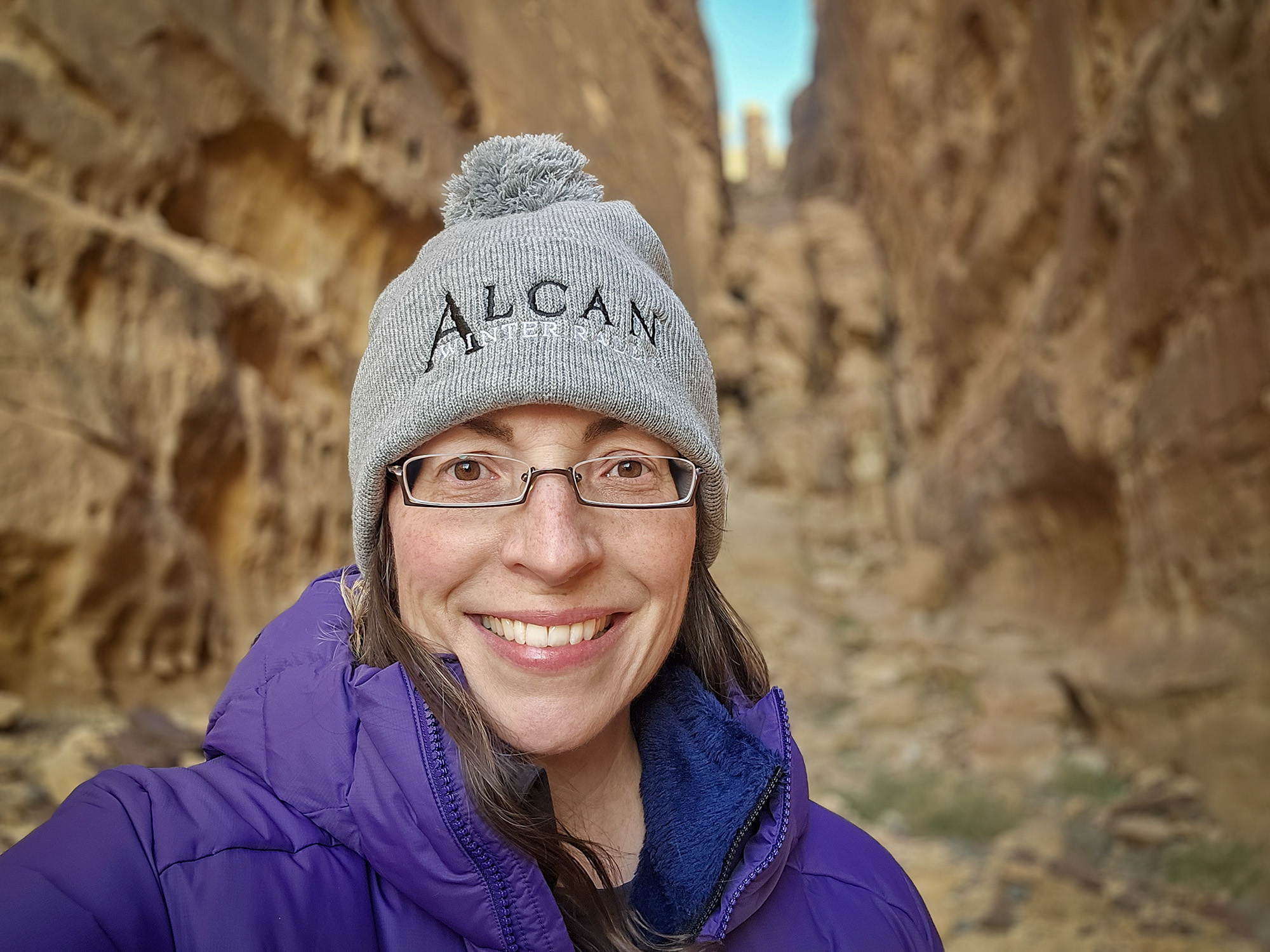
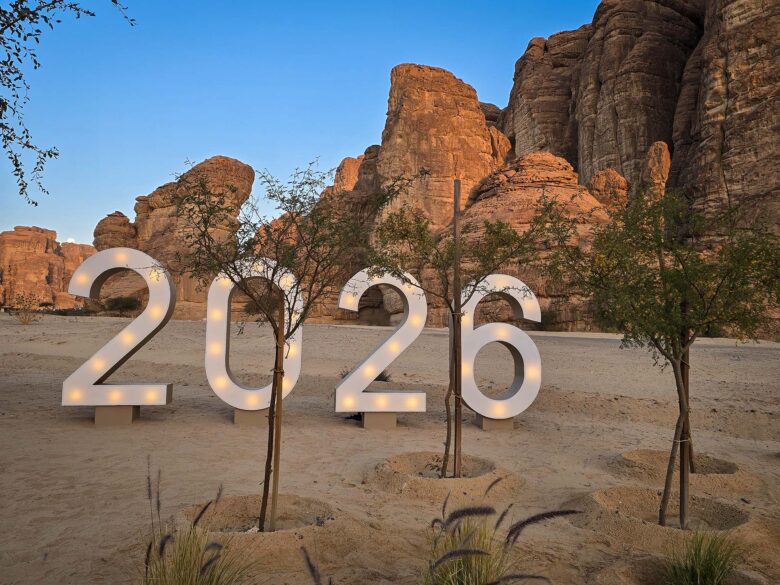
My first morning in Saudi Arabia was stunning. I woke up before the sun rose above AlUla’s huge rock formations, which are reminiscent of Moab or Sedona in the United States. I had a rare day to myself before I kicked off my coverage of Defender and the 2026 Dakar Rally.
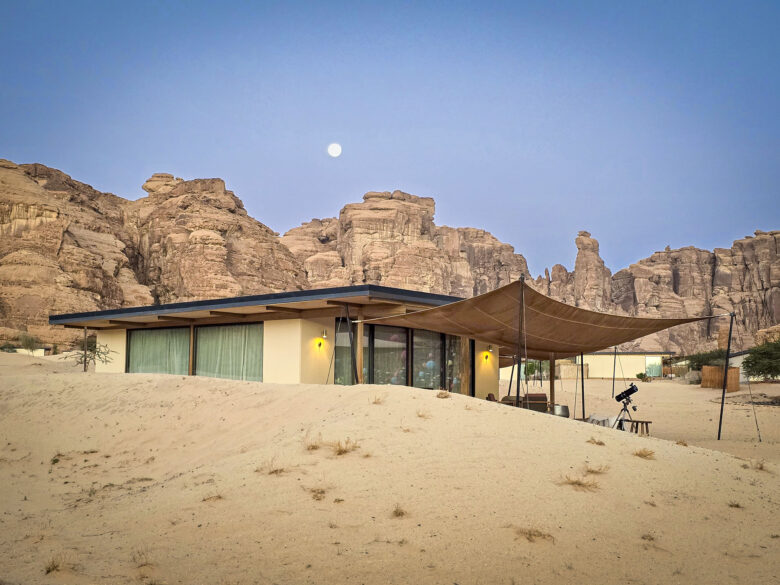
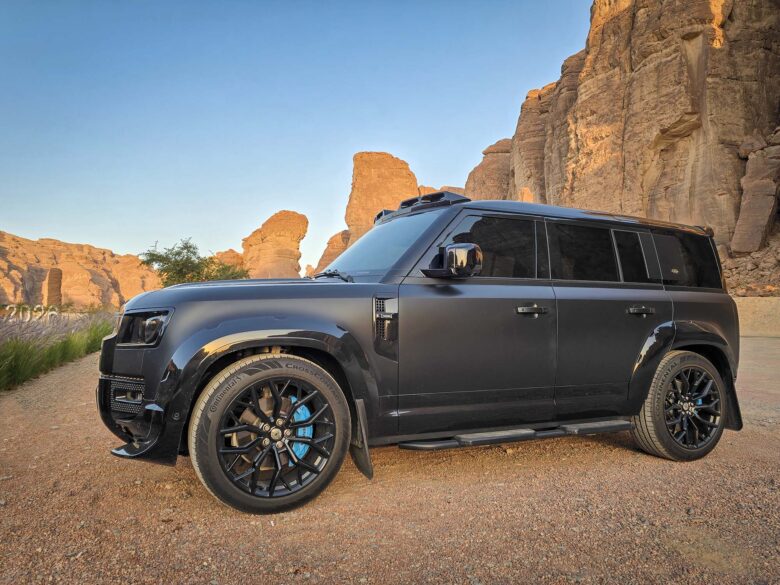
I checked out the area by foot. It’s amazing what you can discover, if you take the time to slow down a bit, if even for a morning. There were so many Land Rovers and other 4x4s around, and with good reason.
As the sun came up, I discovered odd-looking rock formations that popped up in the middle of nowhere. Finally found one where tracks already led up to it (the entire area has perfectly groomed sand everywhere), and discovered these formations were hollow. Hidden cellphone towers! Clever way to blend them into Saudi’s desert landscape.
Unexpected Friends in Saudi Arabia
While sitting down to breakfast, I was invited to join another table with fellow Americans, Elissa Title, and her mother, Nancy. I met them briefly on the previous night’s flight from Riyadh to AlUla. They were staying at the same place, too, so we broke bread together and learned of each other’s travels and lives. Nancy has been to more than 120 countries, with Elissa not far behind!
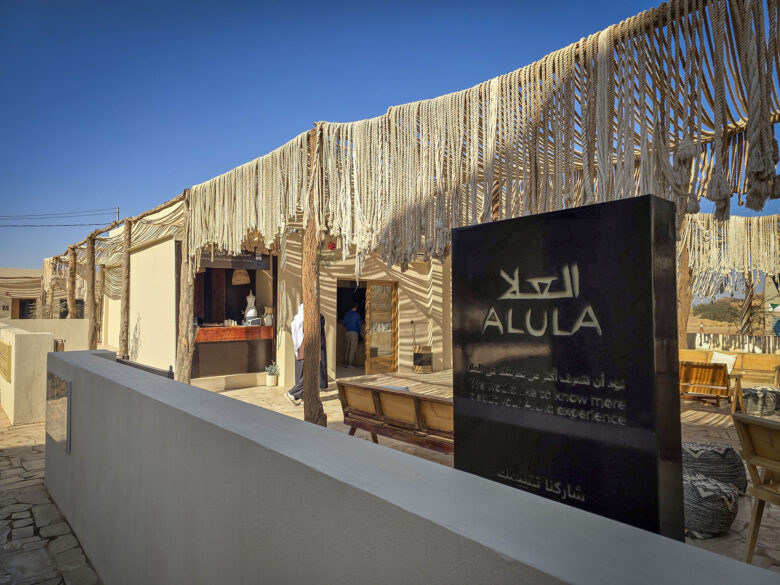
Hegra and Nabataean Tombs
What was an open day before heading off to cover the 2026 Dakar Rally turned into an amazing adventure filled with wonder and excitement. I packed in as much as much as possible with a free day in Saudi Arabia. I toured with Elissa and Nancy through Hegra, Saudi Arabia’s first UNESCO World Heritage site in the AlUla region.
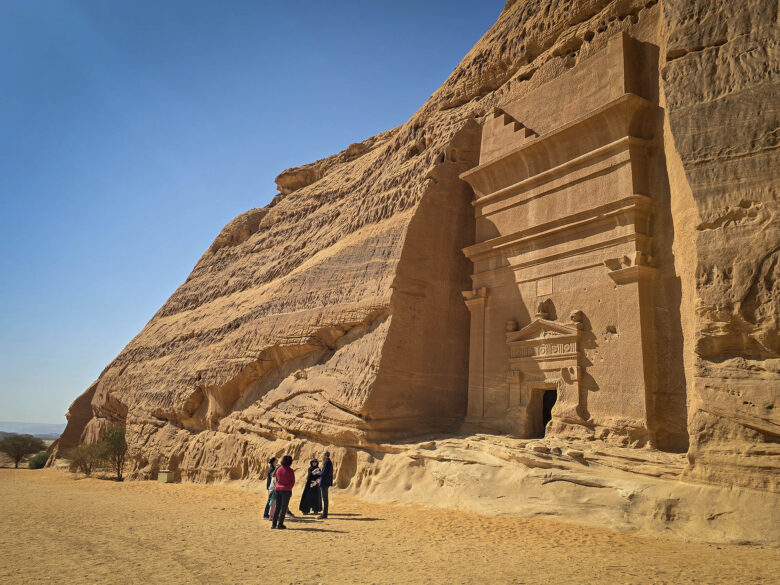
It’s famous for its well-preserved Nabataean rock-cut tombs that have varying facades, featuring ancient architecture similar to Petra. Hegra was the southernmost city of the Nabataean Kingdom and served as a crucial trading hub. The area has over 110 tombs and facades dating from the 1st century BC to the 1st century AD. Hegra was fascinating, humbling, and stunning.
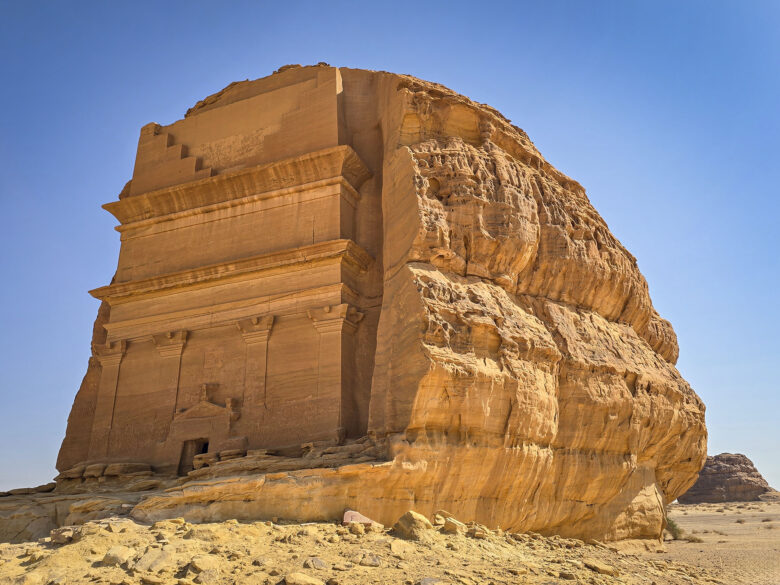
Maraya’s Mirrors
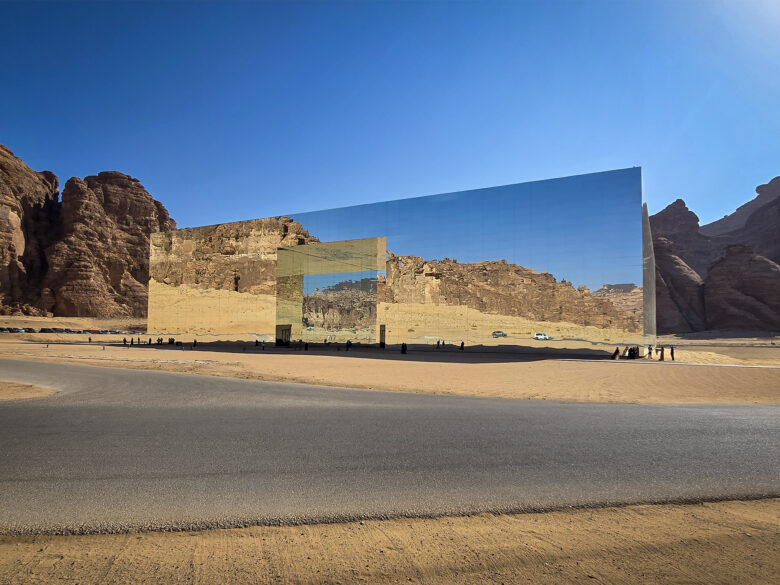
We also saw Maraya, the world’s largest mirrored building, which stood proud in the desert landscape. Maraya is located in the Ashar Valley of AlUla. It features a breathtaking facade of 9,740 reflective glass panels.
Harrat Viewpoint During Golden Hour
I could’ve spent all day in Hegra as well as Maraya, but more was in store for me. We also went to Harrat Viewpoint, where we saw the city of AlUla and mass orchards of date trees down below.
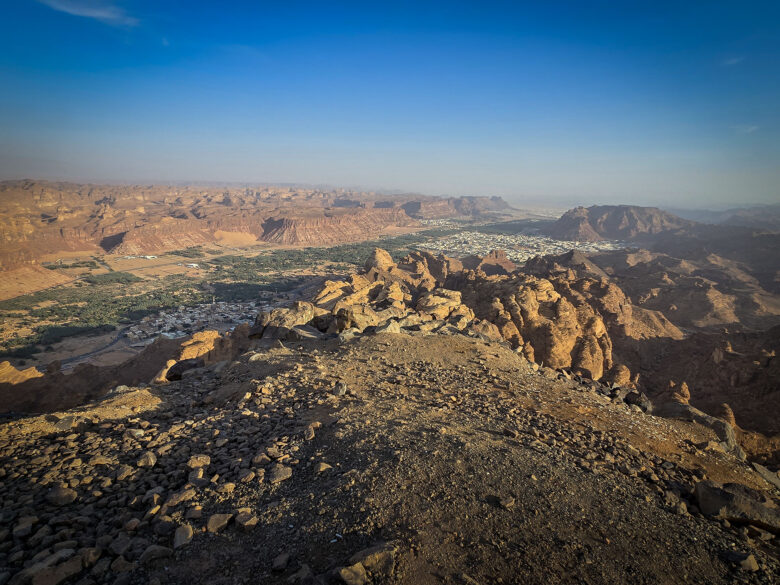
Much more to share on these experiences soon. Huge thanks to Elissa and Nancy for the invite to spend the day with them! What happens next? The 2026 Dakar Rally with Defender.
Photos and video by Mercedes Lilienthal
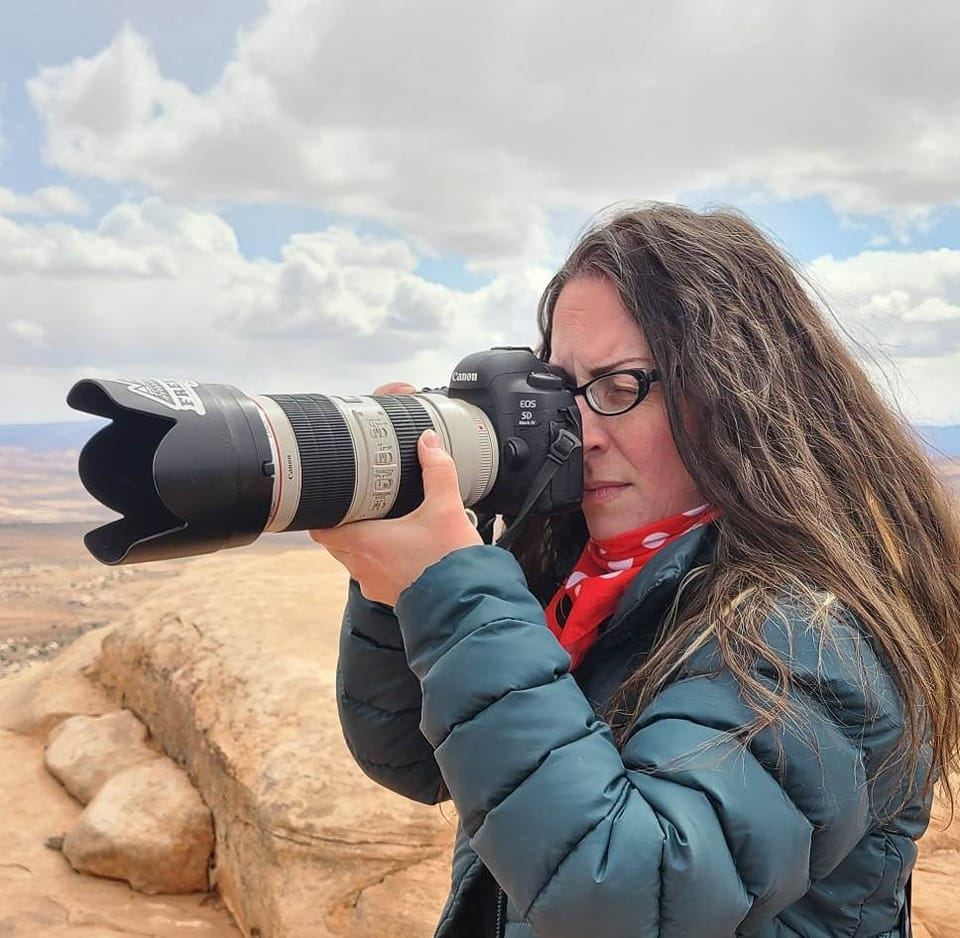
Mercedes Lilienthal is an award-winning journalist, photographer, and content creator who specializes in vehicular adventure travel, the automotive industry, and inspiring people within it. Mercedes, a dual citizen of the United States and Germany, loves to document her travels. Her work includes journalism and photography for a wide array of publications in multiple countries, including The New York Times, Forbes, Car and Driver, and many more.
Leave a Reply