
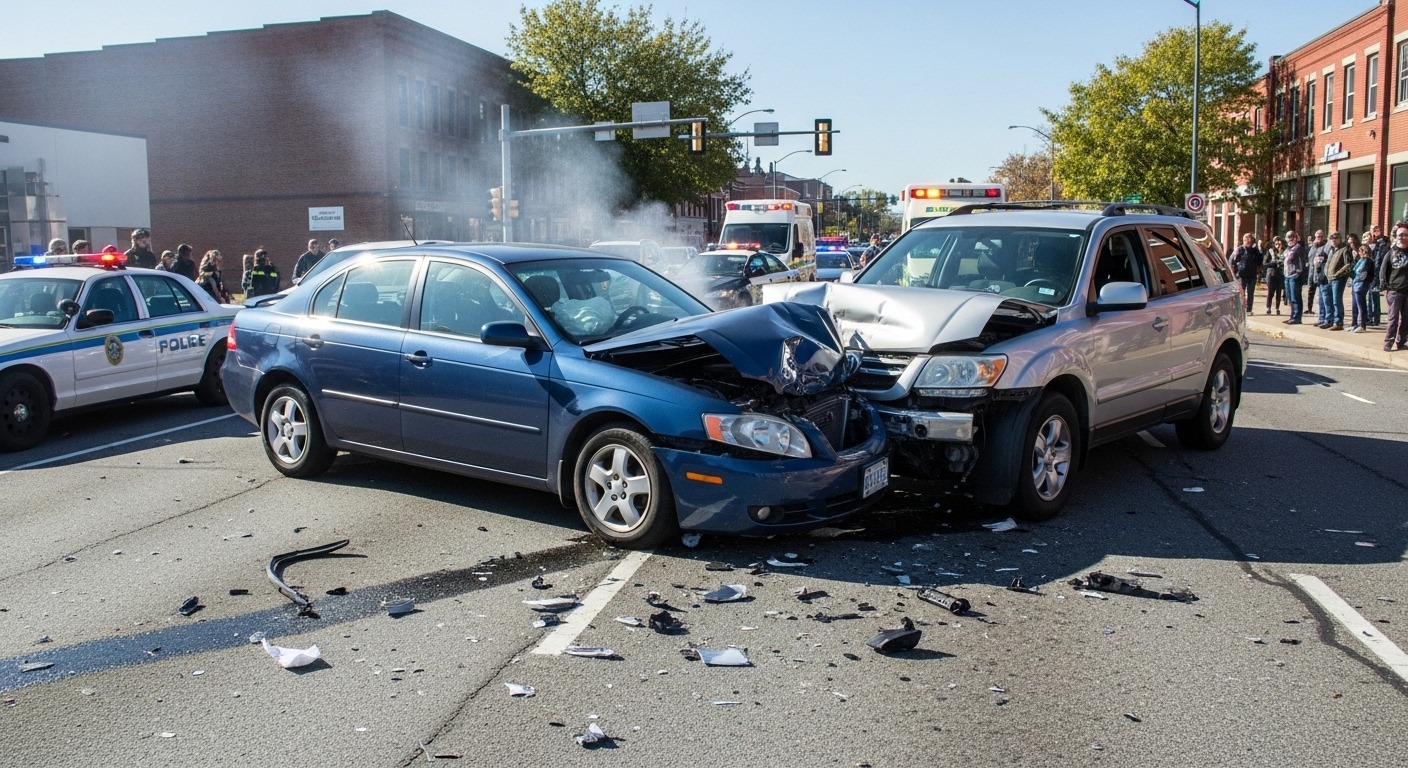
According to The Zebra, 82% of U.S. drivers admit to experiencing road rage or engaging in aggressive driving at least once in the past year. In addition, 59% of drivers reported expressing anger by honking, while 45% said they have changed lanes without signaling.
But what is road rage? And how dangerous are road rage behaviors?
When a crash occurs due to these actions, the at-fault driver may be held liable for damages. In severe cases, their conduct could also lead to punitive damages on top of the standard compensation claims.
Let’s look at how road rage impacts liability in a car accident claim.
Negligence vs. Intentional Tort: The Core Legal Distinction
The majority of car accident claims establish their basis through allegations of negligence. The driver who speeds, tailgates, and runs a stop sign has breached the duty of reasonable care that he or she is obligated to uphold towards all other road users. Road rage incidents that result in accidents fall under the framework of negligence.
The evidence about the driver’s mental state determines whether road rage crashes lead to negligence claims or more serious intentional tort claims, which include assault and battery and intentional infliction of emotional distress. These claims apply when a driver purposefully causes harm through behaviors like ramming a vehicle, forcing another driver off the road, or physically assaulting them.
An intentional tort requires proof that the driver acted deliberately with the intent to cause harm or create the apprehension of harm. The mental state requirement changes every aspect of the claim analysis process, which includes determining available damages and insurance coverage options.
How Insurance Coverage Is Affected
In most auto accident cases, coming to a good settlement with the insurance company is the best way to go. It can help you to get the money you need more quickly and offers a guaranteed payout. Despite this, there are cases when the insurance companies won’t make a fair offer, according to Austin car accident lawyer Lance Sharp.
Most liability policies provide limited coverage protection for intentional harm while UM and UIM coverage depend on the policy language and state law.
Standard auto insurance policies focus on protecting against unintentional accidents, which leads to coverage denial when an insurer determines that the aggressor acted with purpose instead of making an unintentional mistake.
In road rage incidents, when an insurer uses that exclusion to deny coverage, injured victims discover that the aggressor lacks insurance protection for their claim, even though the aggressor has auto insurance. The victim will use their own uninsured or underinsured motorist coverage to receive compensation.
Insurers need to investigate specific facts according to insurance policies and legal jurisdictions to determine road rage behavior because its definition characterizes the path for their investigation.
Punitive Damages in Road Rage Cases
Punitive damages are not available in ordinary negligence cases. The proof needs to show conduct that exceeds basic carelessness because it requires demonstration of willful behavior or malicious intent, or specific states need to prove conscious disregard for others’ safety.
Road rage, which includes aggressive driving behavior through intentional vehicle collisions and street racing activities, meets the requirements for punitive damages in most legal systems. Different states determine how punitive damages become accessible and which evidence standards apply to obtain them, while also setting limitations on the maximum damage awards.
People tend to resolve punitive damage disputes through legal proceedings instead of using their insurance policies, although cases that involve potential punitive damage liability can reach settlements.
Criminal Proceedings and Their Relationship to Civil Claims
Road rage incidents that involve deliberate aggression result in criminal charges against the aggressor. The criminal proceedings function separately from any civil suit that seeks to recover damages.
A criminal conviction or guilty plea can significantly strengthen a related civil claim, but it does not automatically establish civil liability in every jurisdiction or on every issue. Some instances permit issue preclusion to operate as collateral estoppel, which varies according to jurisdictional rules, yet criminal proceedings create different effects on civil liability outcomes.
A civil claim does not depend on criminal charges being filed or a conviction being obtained. An acquittal in criminal court does not prevent a successful civil judgment because criminal proceedings require stronger proof than civil cases do.
Comparative Fault and the Role of the Victim’s Conduct
The legal system applies comparative fault rules to all road rage accident claims because the injured party in an accident shares responsibility for the crash. According to this rule, the injured driver who showed aggressive behavior and fought back during the incident will lose part of their damages.
In modified comparative negligence states, people will lose their right to recover damages when their fault exceeds the established boundary, usually between 50 and 51 percent. The legal system in states that still use contributory negligence will block all recovery when the injured party shows any fault.
Insurance adjusters in road rage cases sometimes argue that the victim provoked the incident through their own driving behavior, making documentation of what actually occurred before and during the incident particularly important.
Evidence in Road Rage Claims
The strength of a road rage claim depends on the quality of evidence. It should prove both the aggressive behavior of the driver and its connection to the resulting injuries.
All existing evidence in this case is important, including police reports, traffic citations, witness statements, dashcam footage, and traffic camera recordings.
The medical records document all injuries suffered by the patient, including their complete severity level. This will serve as vital proof for the lawsuit’s damages assessment. The current record presents comprehensive information about the accident, detailing all events that occurred before the crash to establish whether the attacker displayed either reckless negligence or intentional wrongdoing.
The legal evaluation of road rage accident claims requires more than a basic negligence assessment. When conduct is intentional, the claim may support assault, battery, or intentional infliction of emotional distress theories but also risks triggering insurance limitations on deliberate harm. The legal system provides punitive damages for cases that involve extreme misconduct, which must meet a higher threshold than basic negligence according to state-specific rules.

Disclaimer: Guest Posts don’t reflect the views and opinions of Crankshaft Culture. Articles include links to websites for products and services. Crankshaft Culture receives a monetary commission for each guest post.
Leave a Reply