
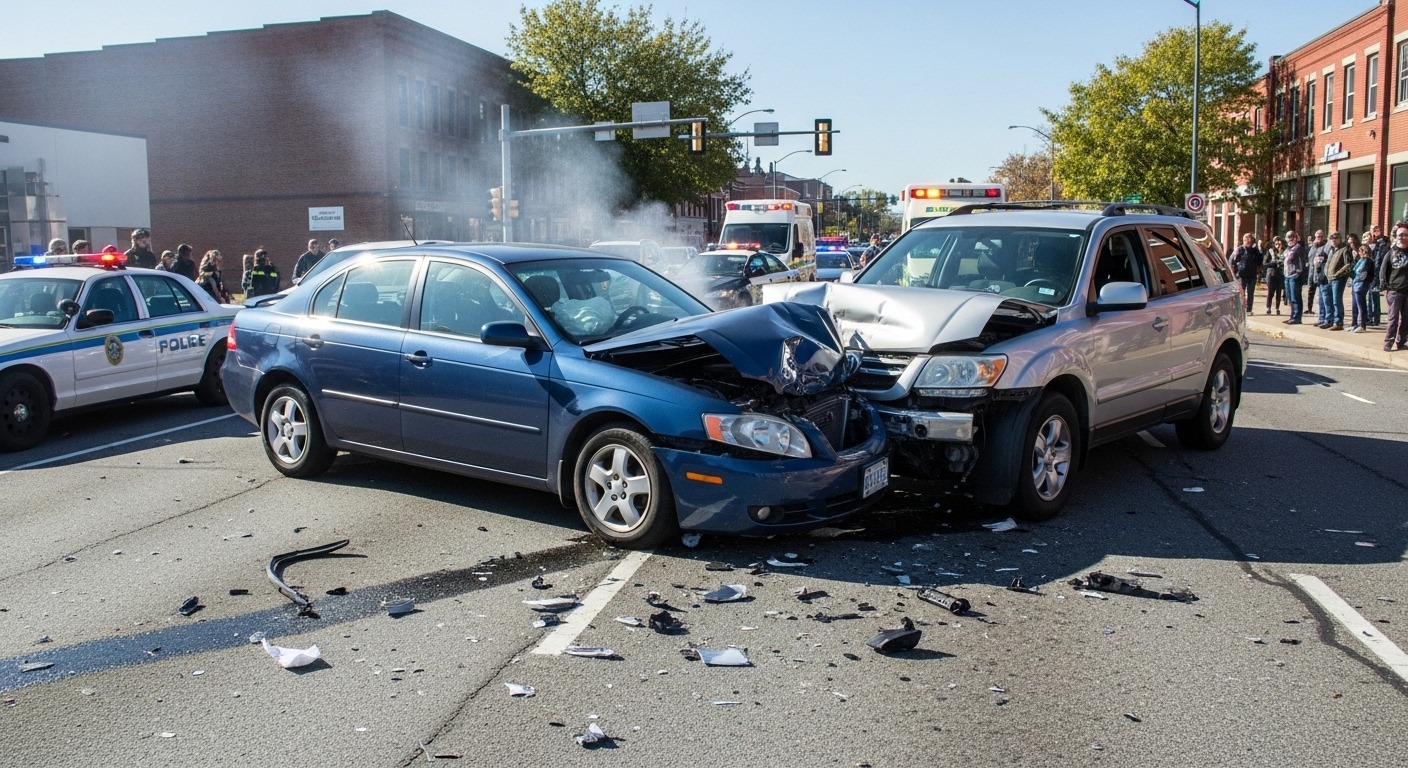
According to a 2025 Insurance Research Council study, 15.4 percent of drivers in 2023 were uninsured, which works out to be more than one in seven drivers. Most states were displaying trends of high uninsured motorist rates from 2017 to 2023.
When a driver who is to blame for an accident is uninsured or is not insured adequately to cover for the victim’s losses, underinsured or uninsured motorist coverage ends up serving as a bridge over the gap between the injured party and a claim for full compensation. The liability insurer could be suing the uninsured/underinsured driver involved, rather than paying for it. The basic principles of auto insurance evaluation require people to understand coverage structure and payment systems. State law requirements will also influence policy implementation and availability.
Let’s discuss how much uninsured motorist coverage costs and how it provides protection to motorists.
UM vs. UIM: Two Distinct Coverages
Uninsured motorist coverage (UM) and underinsured motorist coverage (UIM) are two different legal products that share a connection even when serving distinct purposes.
UM coverage applies when the at-fault driver has no insurance. In many states it may also apply in certain hit-and-run situations where the responsible party cannot be identified. The injured individual uses their UM coverage to receive compensation for damages that should have been handled by the missing driver’s liability insurance.
For instance, in cases when an individual becomes involved in a motorcycle accident and the liable party lacks insurance coverage, the victim can use their UM coverage to recover some of the damages. According to Monterey Park motorcycle accident George A. Gallegos, a fair settlement for your unique accident may be higher or lower, depending on your injuries
UIM coverage applies to situations where the at-fault driver has insufficient liability limits to compensate the insured for their bodily injury expenses. The protection of property damage depends on state regulations and the existence of UM or UIM property damage coverage. This coverage exists as an independent feature that not every state provides. Some states offer difference-in-limits UIM policies, which cover the difference between the at-fault driver’s liability policy limits and the higher limit of the UIM policy.
The other option provides difference-in-damages coverage, which pays the difference between actual damages and what the liability policy covers. This payment will depend on the UIM policy limits.
UMBI and UMPD: The Two Subtypes of UM Coverage
The coverage for UM exists in two parts that provide protection against different types of damages.
Uninsured motorist bodily injury coverage (UMBI) provides coverage for medical costs and lost income, which applies to both the policyholder and their passengers who sustain injuries during an accident with an uninsured driver. UMBI allows for pain and suffering payments, which states determine through their laws and policy specifications. Uninsured motorist (UM) coverage is a necessary basic coverage mandated by state law. This coverage helps drivers protect themselves in case of getting hit by an uninsured driver.
Uninsured motorist property damage coverage (UMPD) provides protection against physical harm that an uninsured driver inflicts upon the insured person’s vehicle. Uninsured motorist coverage in most states will provide benefits for bodily injury only, while it will not cover anything related to vehicle damage.
UMPD coverage is limited in some states. Some state policies require that the coverage be delivered only if no coverage exists for collision to prevent overlapping benefits. In several other states, UMPD coverage was either not permitted by the decision of the owner of policies or not required by state law to be provided.
Drivers who have collision coverage will find UMPD unnecessary since their collision insurance provides vehicle damage protection, which works regardless of the other driver’s insurance situation. The value of UMPD depends on the state regulations and policy terms.
State Requirements: Mandatory, Optional, or Offered
The laws of different states determine whether UM and UIM insurance coverage needs to be obtained by drivers. In about 20 jurisdictions, uninsured motorist coverage is mandatory, while underinsured motorist coverage is required in far fewer states.
Insurers in different locations need to provide these coverage options, but drivers can choose to deny them through written documentation. Some states permit drivers to choose whether or not to use these services.
Different states establish distinct requirements for the mandatory insurance coverage. Some states mandate only UMBI, while others require both UMBI and UMPD. The evaluation of an auto policy requires state-specific evaluation because different jurisdictions have different rules.
Coverage Limits and How They Are Set
The coverage limits for UM and UIM insurance are the same as liability coverage. Limits are defined through per-person and per-accident measurements. The typical limit exists as $50,000 per person and $100,000 per accident for bodily injury with separate property damage limits. Many insurers cap UM/UIM limits at the policyholder’s liability limits, and some states require matching or identical limits.
Insurance professionals and regulators recommend that UM/UIM limits should match liability limits. This approach provides equal protection for both situations when a policyholder causes an accident or when they suffer from one.
Stacking: Combining Limits Across Vehicles or Policies
Some states permit policyholders with multiple vehicles to combine their UM and UIM limits across all insured vehicles and their active policies.
States use different rules to control stacking, which some states completely ban while others allow policyholders to include anti-stacking clauses in their contracts. The two types of stacking are called vertical stacking and horizontal stacking. Vertical stacking allows customers to use multiple vehicles from one policy. Horizontal stacking allows a policyholder to combine policies from different vehicles in their household.
Insurers in states that allow stacking usually restrict this option since stacked coverage requires customers to pay higher premiums than unstacked coverage.
What UM Coverage Costs
The premium charges for UM and UIM coverage will depend on the state of residence and the chosen coverage limits and the driver’s specific driving patterns. The most accurate method to determine costs requires policyholders to obtain multiple quotes while examining the particular coverage options that each policy provides.
The presence of uninsured drivers in higher numbers makes it more likely that drivers will need to make UM claims, which leads to increased premium costs in those states.
Filing a UM or UIM Claim
In the event the liable driver does not have insurance or has poor insurance coverage, the injured party must claim damages through their insurance company, mentioning UM or UIM provisions. The insurer will evaluate damages through a lens similar to that ordinarily applied in third-party lawsuits, which would allow the award of punitive damages if the guilty driver turned out to be negligent.
People who want to evaluate their coverage need to understand the policy limits. These limits define the maximum recovery amount under UM and UIM coverage.
UM coverage applies when an at-fault driver has no insurance, while UIM applies when the at-fault driver’s bodily injury limits are too low to cover the full loss. The two components divide into two categories, which include bodily injury and property damage. State law determines the available and mandatory components. The standard practice establishes coverage limits to match liability limits, while some states permit policyholders to combine vehicle limits for enhanced protection. The most accurate method to evaluate expenses involves comparison shopping since premiums differ based on state requirements, coverage limits, and individual risk assessments.
Once you understand the rules, you will have better options regarding which one applies to your situation.

Disclaimer: Guest Posts don’t reflect the views and opinions of Crankshaft Culture. Articles include links to websites for products and services. Crankshaft Culture receives a monetary commission for each guest post.
Leave a Reply