
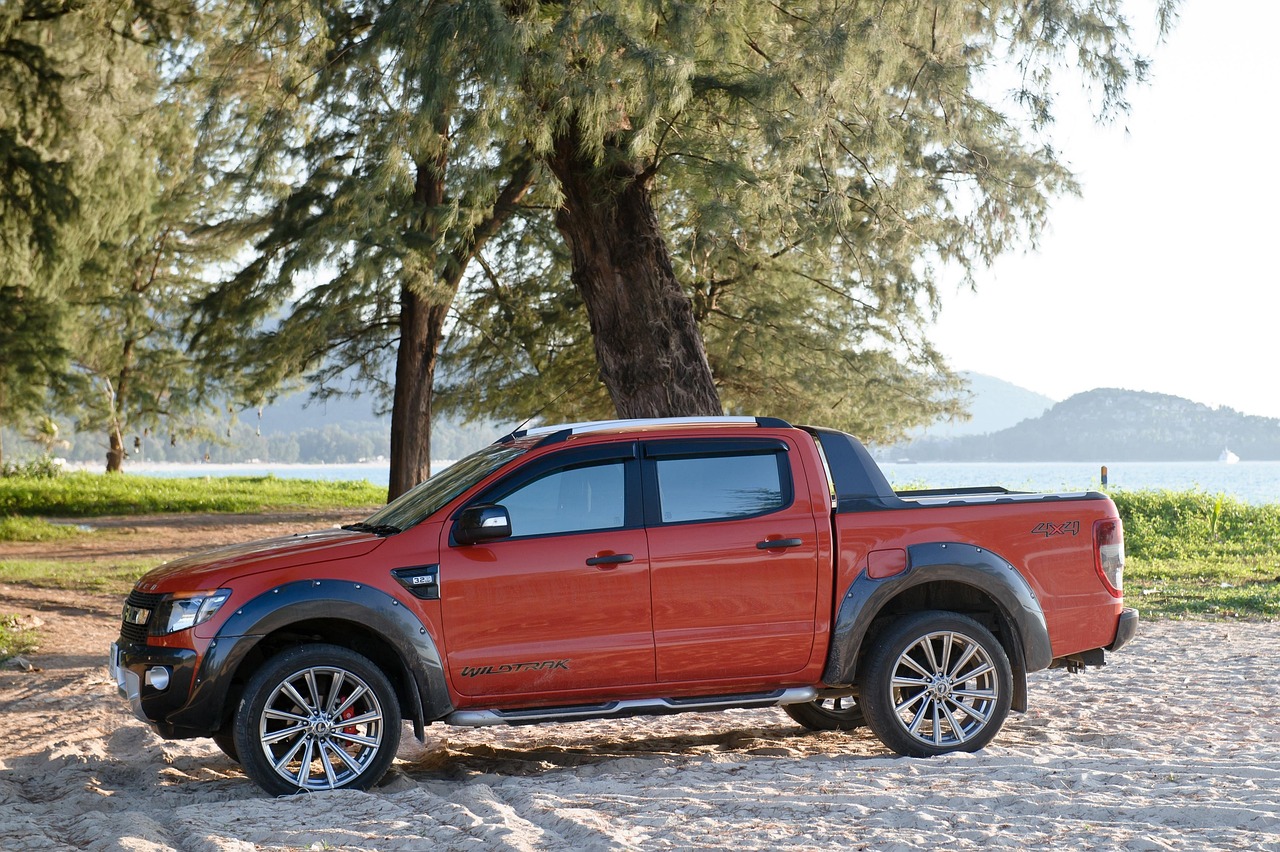
Australian Ford owners are not tied to a franchised dealer to keep a new-car warranty valid. For years the Australian Competition and Consumer Commission has said a manufacturer cannot lawfully refuse a warranty claim just because the scheduled servicing happened somewhere other than a dealership, provided the work follows the manufacturer’s schedule and uses parts of the right quality. Dealer service departments have been losing this work as a result. Independent shops now handle a growing share of routine maintenance, warranty-term cars included, and cost is a big part of why.
What the ACCC position actually says
The rule lives inside Australian Consumer Law, which runs alongside whatever warranty a manufacturer offers. ACCC guidance says new-car warranties cannot be made conditional on the buyer returning to the dealer network for logbook servicing or repairs. Tie a warranty to dealer-only servicing and that is treated as misleading. The consumer guarantees apply no matter who turns the spanners.
Two conditions carry the exemption. First, the servicing has to match the manufacturer’s published schedule: the right intervals, and the right items at each one. Second, the parts have to be genuine or of equivalent quality to what Ford specifies. Meet both and an independent workshop stands on the same legal footing as a dealer.
None of this erases Ford’s own responsibilities. A manufacturer can still decline a claim where the owner cannot show the car was serviced on schedule, or where a fault traces back to poor workmanship or the wrong parts. The question becomes whether you can prove the servicing was done properly, which has nothing to do with which workshop did it.
What an owner has to keep to stay covered
The evidence you need is simple. The logbook is your primary record. Every service should be entered with the date, the odometer reading, the work performed, and a stamp or signature from the workshop that did it. When a claim gets assessed, that entry is what Ford’s warranty team looks for.
Invoices matter too. An itemised invoice that lists the parts fitted, part numbers where they apply, and the oil grade used shows the service met specification. File those with the logbook. A manufacturer is entitled to ask only whether the car was serviced on time and whether it was serviced to spec, and stamped invoices answer both.
Provided the logbook is stamped and the parts meet Ford’s specification, having the work done by a trusted local mechanic keeps a new-car warranty intact under Australian Consumer Law. One caveat is worth knowing. Battery-electric models such as the Mustang Mach-E can need dealer-level diagnostic software for certain tasks, so check that a workshop can access what a given job requires before you book.
Capped-price servicing versus an independent
Ford’s capped-price servicing sets a maximum charge for each scheduled service on eligible vehicles, published per model, so a Ranger, Everest or Focus owner can see the dealer figure up front. The scheme brought transparency to dealer pricing and killed the old open-ended guesswork. It is not, however, the cheapest option on the table.
An independent working to the same logbook schedule often quotes under the capped figure. The gap is widest on the pricier services, where the dealer number climbs, and it tends to grow as a car ages out of its early minor services into the bigger scheduled jobs. On a diesel Ranger or Everest, where major intervals mean more labour and more consumables, a few years of ownership can add up to a real difference.
Brisbane’s Wayne Park, an independent workshop that has serviced Fords for 37 years from 107 Castlemaine Street in Milton, is one shop that stamps logbooks and quotes against Ford’s own capped-price schedule. Places like it fit genuine Ford parts and log the service exactly as a dealer would. You keep the warranty and pay less for the same work.
Cost is not the only thing to weigh. A dealer holds the full service history in Ford’s systems, keeps the model-specific tooling on hand, and stays the obvious first call for a recall or a goodwill repair outside the strict warranty terms. Owners who value that continuity, or who want the dealer relationship intact at trade-in, may decide the capped price is worth paying.
When an independent is the right call
For most of the Ford range on Australian roads, an independent workshop with qualified mechanics is a sound choice on both warranty and cost. Take the combustion-engined Ranger, Everest and Focus. The maintenance is well understood, the parts are easy to get, and the work sits inside the scope of any competent general workshop that knows the brand.
The electrified end of the range is the exception. The Mustang Mach-E, and battery-electric Fords generally, rely on manufacturer diagnostic software and high-voltage-qualified technicians for tasks a conventional workshop is not set up to perform. Some independents are investing in EV capability. Many are not. The workshop that looks after a Ranger owner well may not be equipped for a Mach-E at all. Wayne Park, for one, says plainly that it services almost every Ford model but not the electric ones, which is the honest answer for a shop without EV tooling.
Two separate questions sit behind all of this. The warranty question is settled: an independent service on schedule, with the right parts, properly documented, keeps the cover in place. The suitability question turns on the specific car and the specific job, and it is worth a phone call before you book.
For most Ford owners, the choice really is open, and the money saved over a warranty period is real. What carries the weight is record-keeping. Keep the logbook stamped and the invoices filed, and a warranty claim holds up regardless of where the servicing was done.

Disclaimer: Guest Posts don’t reflect the views and opinions of Crankshaft Culture. Articles include links to websites for products and services. Crankshaft Culture receives a monetary commission for each guest post.
Leave a Reply