
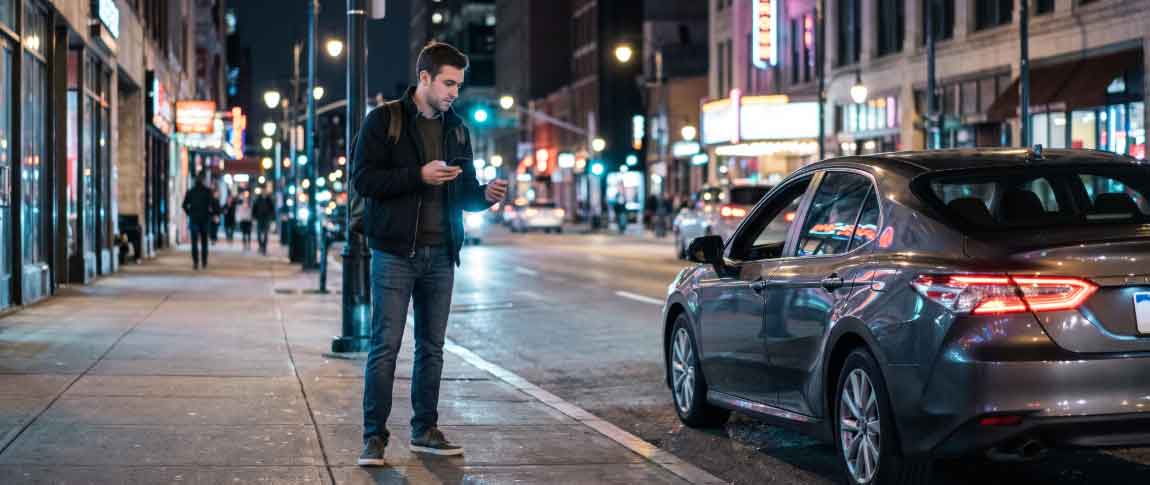
There is a short window between a car arriving at the curb and the moment it moves off, and almost everything worth verifying has to happen inside it. Once the vehicle is in traffic, checking anything becomes awkward, and after a collision the information you wish you had captured belongs to someone else. Texas law actually hands passengers a specific set of facts before they get in. Very few people use them.
Texas Requires the Company to Tell You Certain Things
What must be provided before you enter the vehicle
Chapter 2402 of the Occupations Code requires a transportation network company, before a passenger enters a vehicle for a digitally prearranged ride, to provide through its digital network the driver’s first name and picture, and the make, model and license plate number of the driver’s vehicle.
That is a statutory entitlement rather than a courtesy of the app design. The information is supposed to be there before you open a door.
The plate is the only item that is genuinely unique
A first name is common, a photograph is approximate at night, and a silver sedan on a busy street is indistinguishable from the next silver sedan. The license plate is the single field that cannot be coincidentally similar. Reading it off the screen and then off the car, in that order, takes about four seconds and is the entire verification.
What the digital identification covers
The same chapter defines a digital identification accessible to the driver, which serves as proof of the driver’s identity, serves as proof that the insurance requirements of Chapter 1954 of the Insurance Code are satisfied, displays a photo of the driver and an image of the vehicle, and identifies the make, model and plate.
Read the next part carefully, because it is widely misunderstood. The obligation to display that identification runs to a law enforcement officer or a government official enforcing the chapter, on request. It is not a document a passenger is entitled to demand at the curb.
According to personal injury lawyer Nicholas R. Thompson, Principal and Managing Partner at RTRLAW, the detail that most often decides which insurer responds is the trip record showing the driver’s app status at the moment of impact, and that record sits with the platform rather than with anyone standing at the roadside. Passengers hurt in these collisions frequently reach a San Antonio attorney for Uber crash injuries at the point where a personal insurer and a company insurer begin pointing at each other over exactly that question.
Why the Trip Record Matters More Than the Receipt
Rideshare coverage in Texas steps up and down according to what the driver’s app was doing. A passenger in the car is normally inside the highest tier, but proving the trip existed and when it started is what makes that tier available without argument. A receipt emailed later shows a fare. A screenshot taken during the ride shows the driver, the vehicle, the plate, and the time together on one screen.
Take the screenshot rather than trusting the history
Trip history is retrievable, but it is retrievable through the company on the company’s timeline, and an account can be deactivated, or a dispute can slow the process. A screenshot is yours immediately.
Who Actually Pays Depends on Who Caused It
If the collision was caused by a different driver rather than by yours, the recovery runs against that driver first, and Texas sets the floor low. Section 601.072 of the Transportation Code requires only thirty thousand dollars for bodily injury to one person, sixty thousand per collision, and twenty-five thousand for property damage.
Against a serious injury, those numbers run out quickly, and the next layer is usually uninsured and underinsured motorist coverage, which may come from the rideshare policy, from your own auto policy, or from a policy belonging to a relative in your household. Passengers are often surprised to learn their own coverage can respond to a crash in someone else’s car.
The Thirty Seconds Worth Spending
Match the plate first, then the make and model. Let the driver say your name rather than offering it yourself, since the question who are you waiting for invites the wrong answer. Check that the rear seat belt in your position actually latches, because a belt that does not work is a problem you cannot fix at speed. Use the share trip feature so somebody else holds the route independently of your phone.
One San Antonio-specific point is worth knowing. Bexar County is not among the counties where an emissions inspection is required before registration, and Texas stopped requiring safety inspections for non-commercial vehicles at the start of 2025, so a rideshare car here has typically passed no state inspection at all.
If There Is a Collision
Screenshot the trip before anything else, because that screen changes once the ride ends. Photograph both vehicles and the plates. Get the names of other passengers if it was a shared ride. Report it through the app as well as to the police, so the company’s own internal record reflects that something happened rather than resting solely on the police file.

Disclaimer: Guest Posts don’t reflect the views and opinions of Crankshaft Culture. Articles include links to websites for products and services. Crankshaft Culture receives a monetary commission for each guest post.
Leave a Reply