
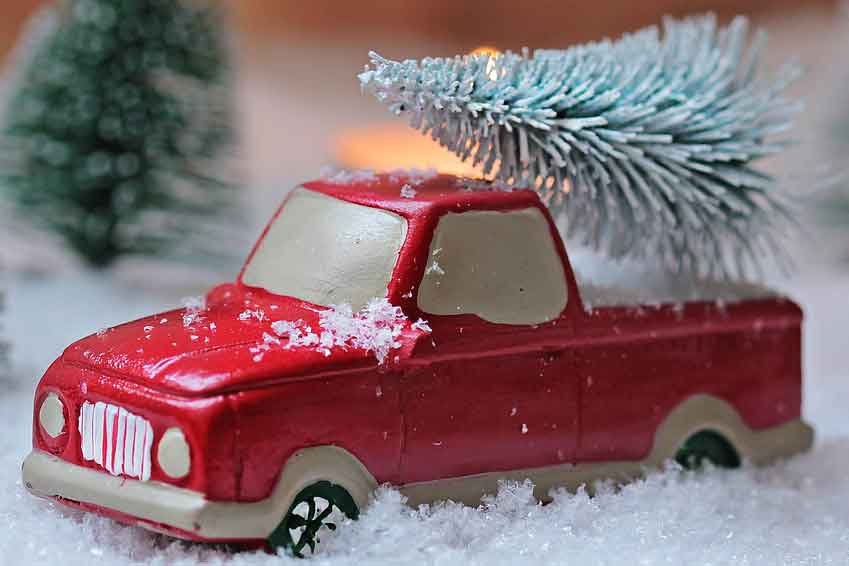
You found the tree. It’s full, it’s fragrant, and it’s exactly the right height for the living room. Then
the lot attendant hands you a spool of thin twine, pats your roof, and wishes you luck.
Somewhere between the parking lot and your driveway sits a freeway on-ramp, and a question
most people never think to ask until the branches start flapping: how fast can you actually drive
with a seven-foot fir strapped overhead? The short version is “slower than you’d like.” The more
useful version involves physics, a few simple tie-down habits, and knowing what the law expects
of you.
What Is a Safe Speed With a Christmas Tree on Your Roof?
No state posts a specific speed limit for carrying a Christmas tree. AAA’s guidance is simply to
drive slowly, use back roads when possible, and recognize that higher speeds create enough
airflow to damage the tree and overwhelm even good tie-downs.
As a practical rule of thumb, keep it at or below about 45 mph and skip the freeway if you have
a surface-street option. That number isn’t a legal threshold. It’s a margin of safety. If the trip
requires highway driving, stay in the right lane, hold a steady speed well under the limit, and pull
over to check your straps after the first few miles
Why Speed Changes Everything
Aerodynamic drag increases with the square of your speed. Going from 30 mph to 60 mph
doesn’t double the force pushing on your tree. It quadruples it. A dense evergreen acts like a
sail, catching wind across hundreds of branches and pulling against every strap and knot.
Higher speeds create three specific problems:
- Lift and shifting. Air rushing under the branches can raise the tree slightly, loosening tension that felt solid in the parking lot.
- Strap fatigue. Constant vibration works knots loose and stretches cheap rope.
- Longer stopping distances. A roof load raises your center of gravity, so hard braking or sudden swerves are riskier than usual.
Can Your Roof Handle the Weight?
Most roof racks are rated to carry somewhere between 110 and 220 pounds, according to a
General Motors engineer quoted by Consumer Reports. A typical Christmas tree weighs about
50 to 70 pounds, which falls comfortably within that range. Always confirm your vehicle’s rating
in the owner’s manual, especially for larger Fraser or noble firs.
Hardware matters as much as weight. Many SUVs come with side rails, but no crossbars, and
crossbars are what you actually tie down to. If you drive a RAV4, Highlander, or 4Runner,
shopping for roof racks for Toyota vehicles that fit your exact model year gives you stable
anchor points instead of improvised loops through the door frame.
How to Secure a Christmas Tree to Your Car
A well-secured tree lets you drive at a reasonable speed with confidence.
Follow these steps before you leave the lot:
- Get it netted. Ask the seller to wrap the tree. Netting compresses the branches and
reduces wind resistance. - Protect the roof. Lay an old blanket or tarp across the roof to prevent paint scratches.
- Point the trunk forward. Placing the trunk toward the front of the vehicle lets air flow
over the branches instead of catching under them. - Use real straps. Bring nylon ratchet straps or strong rope. AAA specifically warns
against the lightweight twine many tree lots provide. - Tie at three points. Secure the bottom, middle, and top of the tree to the rack.
- Do the tug test. Pull hard from several angles. If anything shifts, tighten and test again.
Keep a small holiday hauling kit ready each year with straps, work gloves, and a blanket. If your
garage already has wall-mounted tool storage systems, give that kit its own hook so you aren’t
hunting for straps on the busiest weekend of the season
What Happens If Your Tree Falls Off?
Every U.S. state makes it illegal for items to fall from a vehicle on the road. Penalties vary
widely, ranging from $10 to $5,000, and at least 16 states list possible jail time.
The bigger risk is the people behind you. AAA Foundation research linked road debris to more
than 200,000 crashes over a four-year period, resulting in roughly 39,000 injuries and 500
deaths. About two-thirds of those debris crashes came from improperly secured items falling off
vehicles. And this isn’t rare: in a 2019 AAA survey, 16% of Americans said they’d had a
Christmas tree fall from their vehicle.
Frequently Asked Questions
Can you drive on the highway with a Christmas tree on your roof?
Yes, it’s legal if the tree is properly secured, but it isn’t ideal. Stay below the speed limit, use the
right lane, and stop to recheck the straps shortly after merging.
Can you put a Christmas tree on a car without a roof rack?
It’s possible, but AAA advises against it. Without crossbars, ropes often run through open doors,
which can damage weather seals and leave the tree free to slide.
Which way should a Christmas tree face on a car roof?
Trunk forward. This reduces wind drag on the branches and protects the needles during the
drive.
How often should you check the straps?
Check before you leave, again after the first few miles, and any time you hear flapping,
humming, or shifting overhead.
There’s no magic number printed on a road sign, but slower is always safer when you’re hauling
a tree. Aim for 45 mph or less, choose surface streets when you can, and spend five extra
minutes securing the load properly. Your tree arrives in one piece, your roof stays scratch-free,
and everyone sharing the road with you gets home for the holidays, too.

Disclaimer: Guest Posts don’t reflect the views and opinions of Crankshaft Culture. Articles include links to websites for products and services. Crankshaft Culture receives a monetary commission for each guest post.
Leave a Reply