
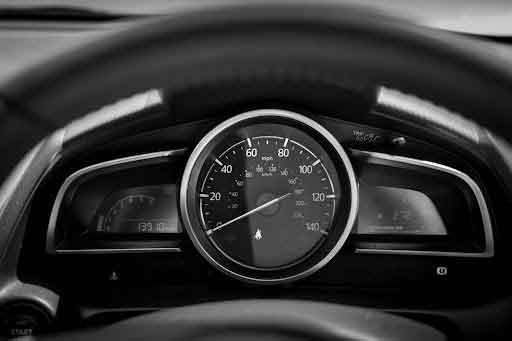
When you shop for a used car, the odometer is usually the first number you check. It makes sense: mileage is a quick way to estimate how much life a vehicle has left. But on its own, mileage tells you surprisingly little about a car’s real condition.
A 60,000-mile car that missed its oil changes can be a worse buy than a 110,000-mile car with a thick folder of service records. Below, we look at what counts as good mileage, when the number starts to matter, and what else you should check before you sign anything.
What Is a Good Mileage for a Used Car?
A good mileage for a used car is one that matches its age. Federal Highway Administration data shows that American drivers covered about 13,700 miles per licensed driver in 2024, and the long-term norm sits between 12,000 and 15,000 miles a year.
That gives you a simple rule of thumb: multiply the car’s age by 12,000. A five-year-old car with around 60,000 miles is right on track, one with 30,000 miles has been driven lightly, and one with 100,000 miles has seen heavy use. The easiest way to get a feel for what’s normal is to compare several similar cars side by side, for example by browsing the used inventory at a local dealer like Old Orchard Nissan, where each listing shows the model year and mileage.
Keep in mind that the rule describes an average, not a pass or fail grade. A car slightly above the curve isn’t automatically a bad deal, and a car far below it deserves a few extra questions.
How Many Miles Is Too Many for a Used Car?
There is no hard cutoff anymore. For decades, 100,000 miles was treated as the point where a car was “used up.” Modern engines, better oils and tighter manufacturing have changed that, and many well-maintained vehicles now run well past 200,000 miles.
What changes after 100,000 miles is the budget, not necessarily the reliability. Around this point, many cars are due for bigger scheduled jobs: timing belt or chain service, transmission fluid, spark plugs, shocks and struts. A high-mileage car priced as if none of that is coming is the real red flag.
What Is Considered High Mileage?
As a rule, anything well above 12,000 to 15,000 miles per year of age is considered high mileage, and many shoppers also treat 100,000 total miles as a mental line. A three-year-old car with 75,000 miles is high mileage. A twelve-year-old car with 120,000 miles is actually below average.
How Many Miles Does a Car Last?
With regular maintenance, most modern cars can reach 200,000 miles or more, and trucks and body-on-frame SUVs often go further. How long a car lasts depends far more on how it was treated than on the brand badge.
Low Mileage Isn’t Always Better
A car that barely moved for years can hide its own problems. Rubber seals and hoses dry out, batteries die, fluids break down with age, and tires can crack long before the tread wears down. Brakes on a car that sat outside may be rusted.
The type of miles matters too. Steady highway driving is easy on an engine and transmission. Short city trips, where the engine never fully warms up and the brakes work constantly, cause more wear per mile. Two cars with the same odometer reading can be in very different shape.
What to Check Besides Mileage
Once the mileage looks reasonable, these checks tell you whether the car behind it is worth buying.
- Maintenance records. Regular oil changes and on-time scheduled service are the best predictor of a long engine life. Gaps of several years with no records deserve questions.
- Vehicle history report. It shows reported accidents, the number of owners, title problems such as salvage or flood status, and odometer readings over time. The Federal Trade Commission recommends getting one before you buy.
- Rust and the underbody. Cars from snowy states face years of road salt. Look underneath at the frame, brake lines, exhaust and rocker panels, not just the shiny paint.
- Tires, brakes and suspension. Uneven tire wear can point to alignment or suspension problems. Clunks over bumps or a car that keeps bouncing after a dip mean worn parts.
- Engine and transmission on a test drive. Listen for knocking or whining, watch for smoke, and make sure shifts are smooth. Any warning light on the dashboard should be explained before you buy.
- Open recalls. Enter the VIN in NHTSA’s free recall lookup to see if any safety recall was never repaired. Recall repairs are free at a franchised dealer.
- A pre-purchase inspection. An independent mechanic can spot leaks, worn components and hidden accident repairs in an hour or so. It is a small cost compared with an expensive surprise.
The Bottom Line
Mileage is a useful starting point, but it is only one line in a car’s story. Use the age-times-12,000 rule to see whether the number makes sense, then let the service history, the inspection and the test drive tell you the rest.
A well-maintained car with higher miles is often a smarter buy than a neglected one with a low odometer reading. Take your time, ask for the paperwork, and buy the car’s condition, not just its number.

Disclaimer: Guest Posts don’t reflect the views and opinions of Crankshaft Culture. Articles include links to websites for products and services. Crankshaft Culture receives a monetary commission for each guest post.
Leave a Reply