
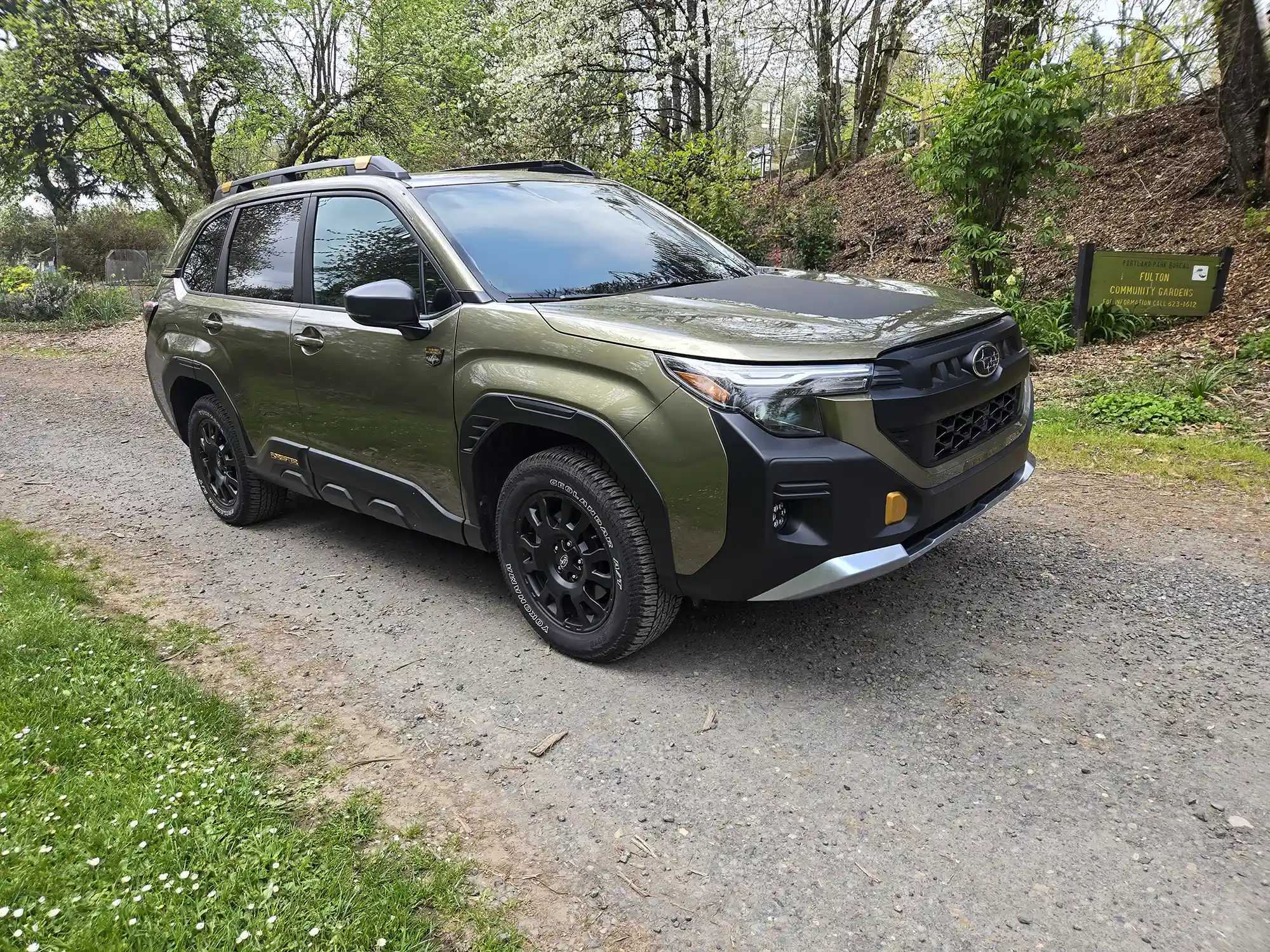
We’ve tested many Subarus in our lifetime. Not only do we review vehicles, like the 2026 Subaru Solterra Touring XT or a modified 2025 Subaru Crosstrek Wilderness, but we’re Subaru owners, too. We just got a 2026 Subaru Forester Wilderness (FW) to drive for a week. My wife, Mercedes, went to the launch of this all-wheel-drive adventure machine in California, but it was my first time behind the wheel of it. Would it be as good as a daily driver as our 2022 Crosstrek or an ideal platform for off-pavement adventurers?
The 2026 Forester Wilderness has 9.3 inches of ground clearance, increased approach angles, and a new design that builds upon Subaru’s popular Wilderness platform. The sixth-generation Subaru Forester debuted a while ago, but they expanded their offerings, and now a new 2026 Forester Wilderness has been added to its lineup.
2026 Subaru Forester Wilderness Off-Pavement Features
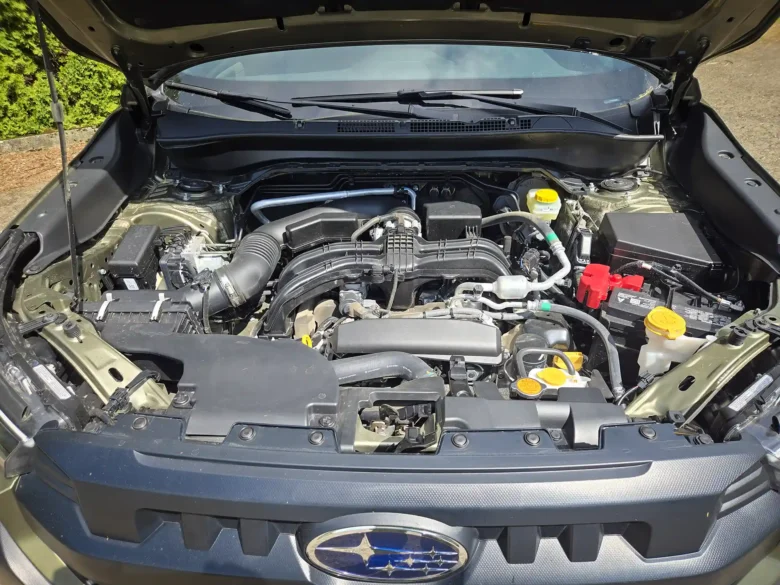
The previous-generation Subaru Forester Wilderness was built on the standard Forester platform, but it had Wilderness-centric add-ons. However, when Subaru did its research on the Wilderness segment, it learned that nearly 50% of Wilderness owners use them off pavement. Consequently, the 2026 FW version is built from the ground up with dirt-filled adventures in mind.
The new Forester Wilderness is powered by a revised 2.5-liter Boxer powerplant. It kicks out 180 HP and 178 lb.-ft. of torque. This year’s FW also showcases an upgraded transmission cooler and generates more power at lower RPMs for added responsiveness vs. the previous iteration.
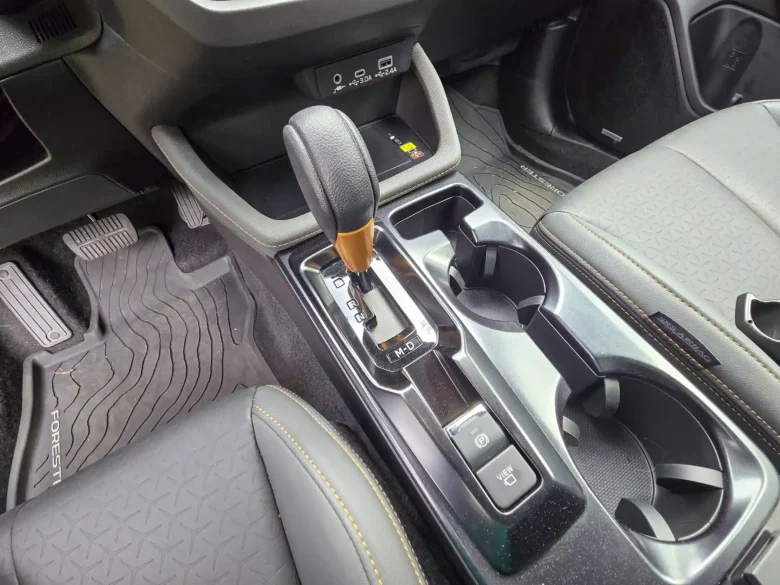
The FW features a CVT with manual shifting mode and paddle shifters (both critical to have when competing in time-speed-distance rallies). It also has a shorter final drive ratio for enhanced lower speed capability when driving in the dirt, especially when it is combined with Subaru’s X-MODE in Snow/Dirt or Deep Snow/Mud modes.
The new Subaru FW also features a standard 180-degree front view camera, finally! But, unlike other manufacturers, this system doesn’t show a bird’s-eye view or side views of the fenders. We’re not sure when or if they’ll plan to include them, either.
Note: This FW has a Wilderness-tuned suspension, a rear differential temperature sensor, and an upgraded rear differential, too.
Forester Wilderness Stats
Subaru’s new 2026 FW increases its ground clearance to 9.3” (vs. 9.2” of its previous generation). It also has improved angles for off-roading:
- Approach: 23.5 degrees vs. 19 degrees
- Departure: 25.5 degrees vs. 24.6 degrees
- Breakover: 21 degrees vs. 19.6 degrees
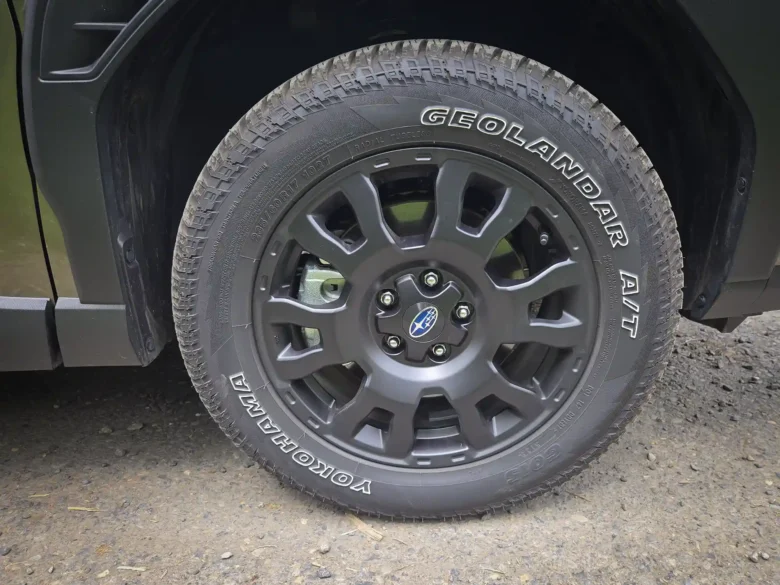
The new Forester Wilderness rides on wider Yokohama Geolandar all-terrain tires (235mm vs. 225mm). It comes with a full-size spare, but it’s a 225mm tire, not a 235. So, while full-size, it’s still a temporary spare.
Tow stats: The 2026 FW can tow more, too (3,500 pounds vs. the earlier iteration at 3,000 pounds). Note: That’s the most Subaru has ever offered on this model.
The new FW also has increased roof rail capacity, up to 800 pounds (from 700)—ideal for a rooftop tent or heavier cargo.
The Forester has grown and become more refined since we owned a 2012 Forester 2.5X and our highly modified (and very quick) 2005 Forester XT. Here are the 2026 Forester Wilderness measurements:
- Length: 182.9”
- Width: 72.4”
- Height: 69.3”
- Wheelbase: 104.9”
Interior Accoutrements
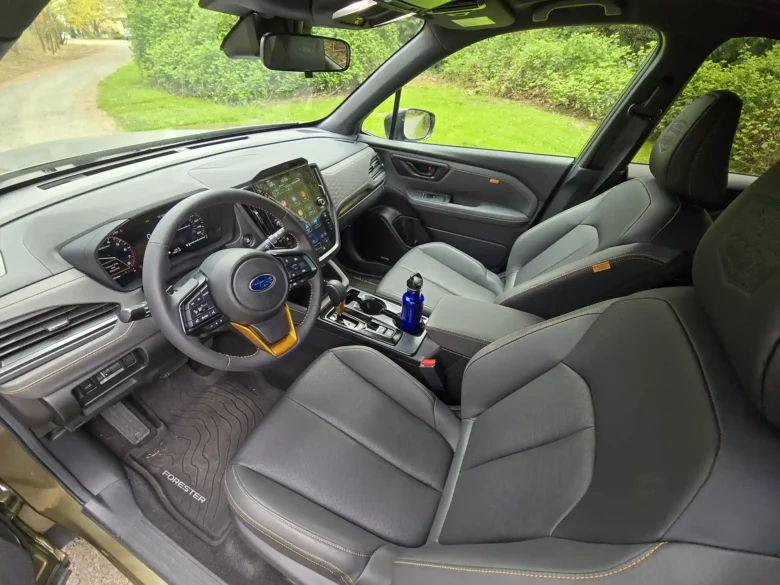
Subaru keeps its Wilderness interior easy-to-clean StarTex seat upholstery, but it has a new texture as part of its animal-free interior.
The 2026 FW also showcases a redesigned center console. It gives owners more storage (up 1.1 liters from the previous generation). They also allow for smartphone storage and larger cupholders. The rear has enough room for a 32-ounce Nalgene bottle.
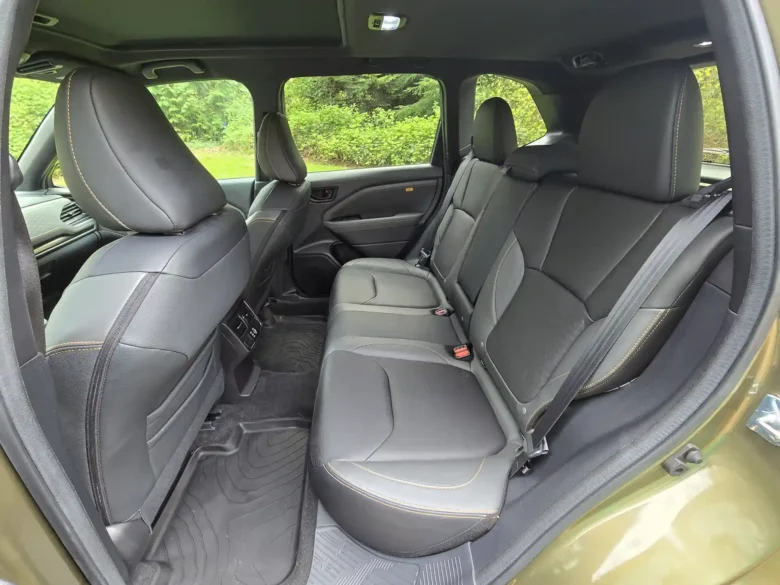
This OEM also gives Wilderness owners all-weather floor mats as well as a rear cargo mat. They also have water-resistant rear seatback coverings. That’s perfect for muddy excursions. The 2026 FW also comes with an all-weather package. It features heated front seats and a steering wheel, as well as a windshield wiper deicer area.
Additionally, Foresters come with the latest edition of EyeSight. It has a ton of driver-assisted safety features, like Blind-Spot Detection, Rear Cross-Traffic Alert, Emergency Lane Keep Assist, and Automatic Emergency Steering. This system works in a larger range of conditions. It also has updated software.
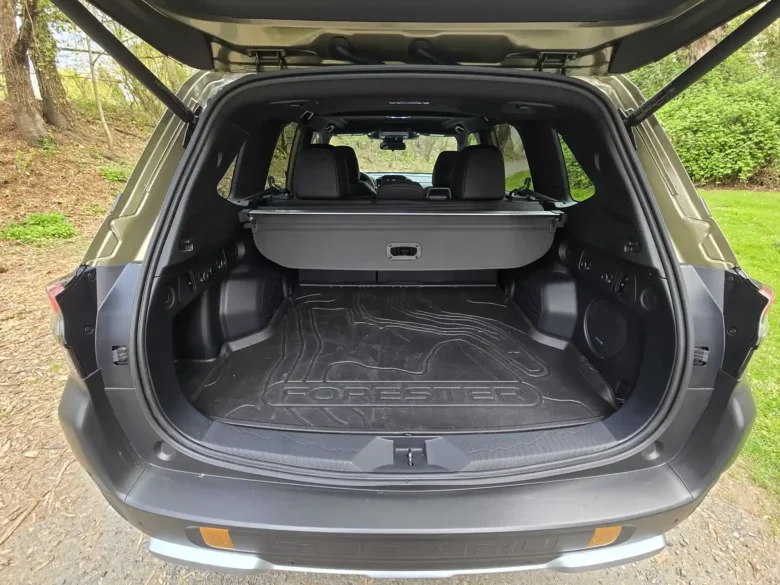
The 2026 Forester Wilderness has 29.6 cubic feet of cargo capacity behind the rear seat without the moonroof, and 27.5 cubic feet with the moonroof.
Our tester had the 11.6-inch infotainment system equipped with TomTom navigation, an 11-speaker Harman Kardon system with a 576-watt equivalent amp, a new 12.3-inch digital driver’s gauge cluster, and a power rear lift gate.
These add-ons come with a $2,200 price tag. While we didn’t use the vehicle’s navigation during our testing, there are some physical buttons and knobs for the infotainment and HVAC systems, but the majority of its usage is still via a touchscreen.
The 2026 Forester Wilderness has a starting MSRP of $38,385. But if you opt for the River Rock Pearl, it’ll set you back another $395. Add to that the other optional packages, and you can mix and match your way to adventuring fun for an extra cost.
2026 Subaru Forester Wilderness Thoughts
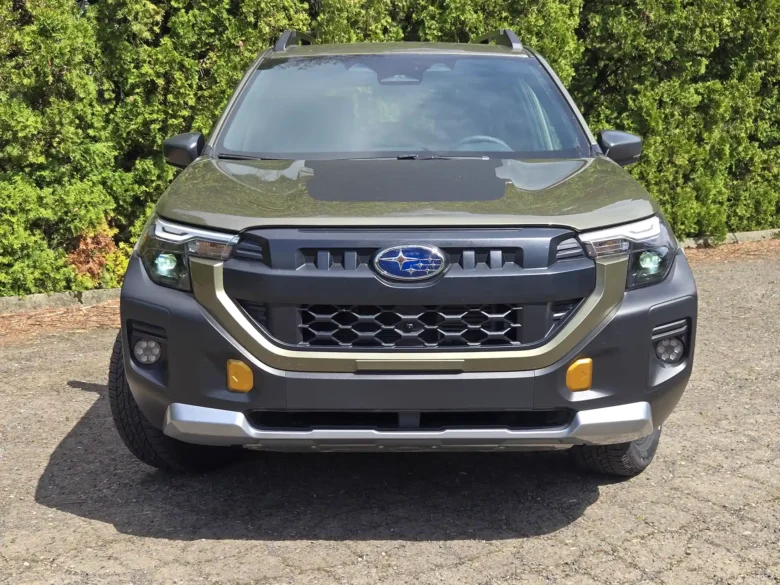
The 2026 Subaru Forester Wilderness ups the Forester’s adventure ante.
The FW rides and drives similarly to the Crosstrek Wilderness, but gives you more space. It’s also very easy to drive with excellent outward visibility.
The interior is straightforward in its layout and operation and is comfortable. There’s ample storage for stuff, and the cargo area is bigger than that of its Crosstrek Wilderness cousin. It also has a 12-volt plug in the back, great for accessories, such as DC fridge or other camping bits. It includes a sliding tonneau cover. The Forester Wilderness has a distinctive look, and it fits right in with the Crosstrek and Outback of the same trim level. Lots of black plastic cladding, gold-hued bits, and a rugged style help to give the vehicle a more macho look vs. a standard Forester.
The front fascia has two upturned areas on either front corner. Without genuine underbody protection, the underneath of these could become scuffed if off-roading hard enough.
A thin taillight brow adorns the rear with SUBARU-embossed plastic rear bumper accented with bronze accents. You won’t forget this is a Subaru, at least not from the back!
Driving the Forester Wilderness
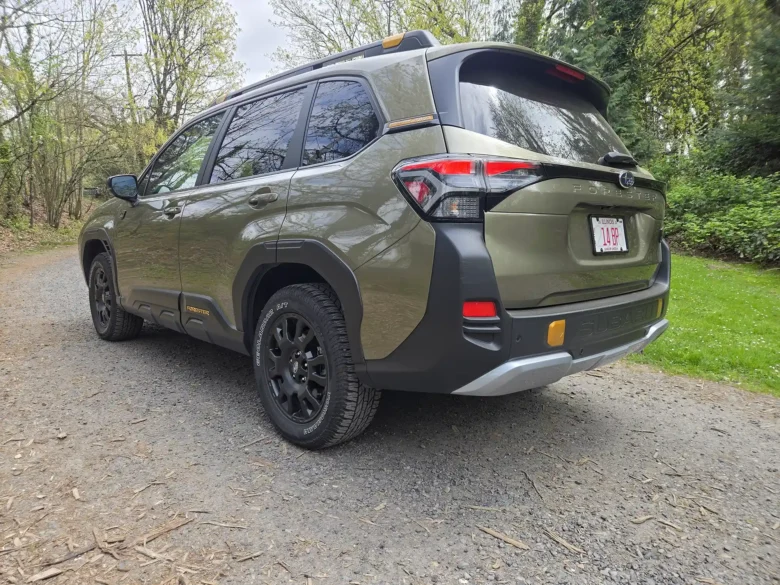
The 2026 Subaru Forester Wilderness is fun, maneuverable, and easy to drive, especially when using paddle shifters. Subaru has included a variety of on- and off-road driving modes to enhance driver experiences.
Mercedes had previously driven this car off-road in Washington. I never left the pavement for more than a brief while. The car is just so easy to drive. It doesn’t have any odd behaviors on road, and rides competently. Visibility is excellent. I kept thinking, this is how other SUVs should be. It’s also very good for shorter people; I kept thinking my five-foot-tall mother could easily live with this car.
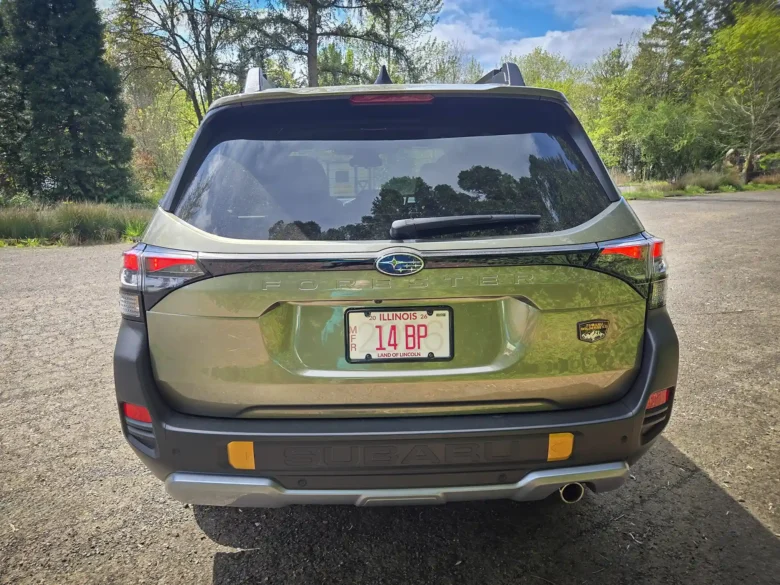
The naturally aspirated 2.5-liter engine isn’t going to be the fastest vehicle on the road. There’s no turbo, no bigger powerplant. Acceleration is adequate, but not more. The Si-Drive mode does help with throttle response, however. Handling is predictable and stable, but with the all-terrain tires and taller profile, it’s not destined for the twisties, despite having a willing chassis. Like other Wilderness vehicles, there are all the lane-keeping, adaptive cruise, and automatic steering assistance gadgets, which aid in this car’s ability to be a good road tripper. Wind noise was present, but not deafening.
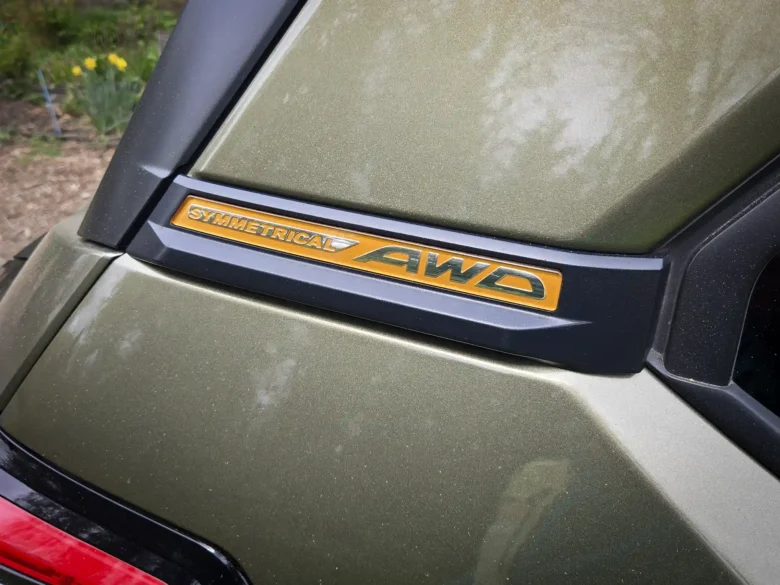
Despite the Wilderness’ off-road appearance, the car isn’t exciting to drive on the road, but sometimes you just want something that drives well and can take you through just about any condition Mother Nature throws at you. And when you want a bit more clearance and capability, that’s when the Forester Wilderness comes into play. Bigger than a Crosstrek Wilderness, smaller and less powerful than an Outback Wilderness with the turbo 2.4-liter. Call it the Goldilocks Wilderness.

Andy Lilienthal is an award-winning writer and has written professionally since 1999. He has over 15 years in the automotive aftermarket working at companies including Warn Industries, Bushwacker, and Lund International. Editorial works include writing and photography for off-road print magazines, to new-car reviews online. He’s a photographer with images in multiple magazines, blog sites, and The New York Times.
Leave a Reply