
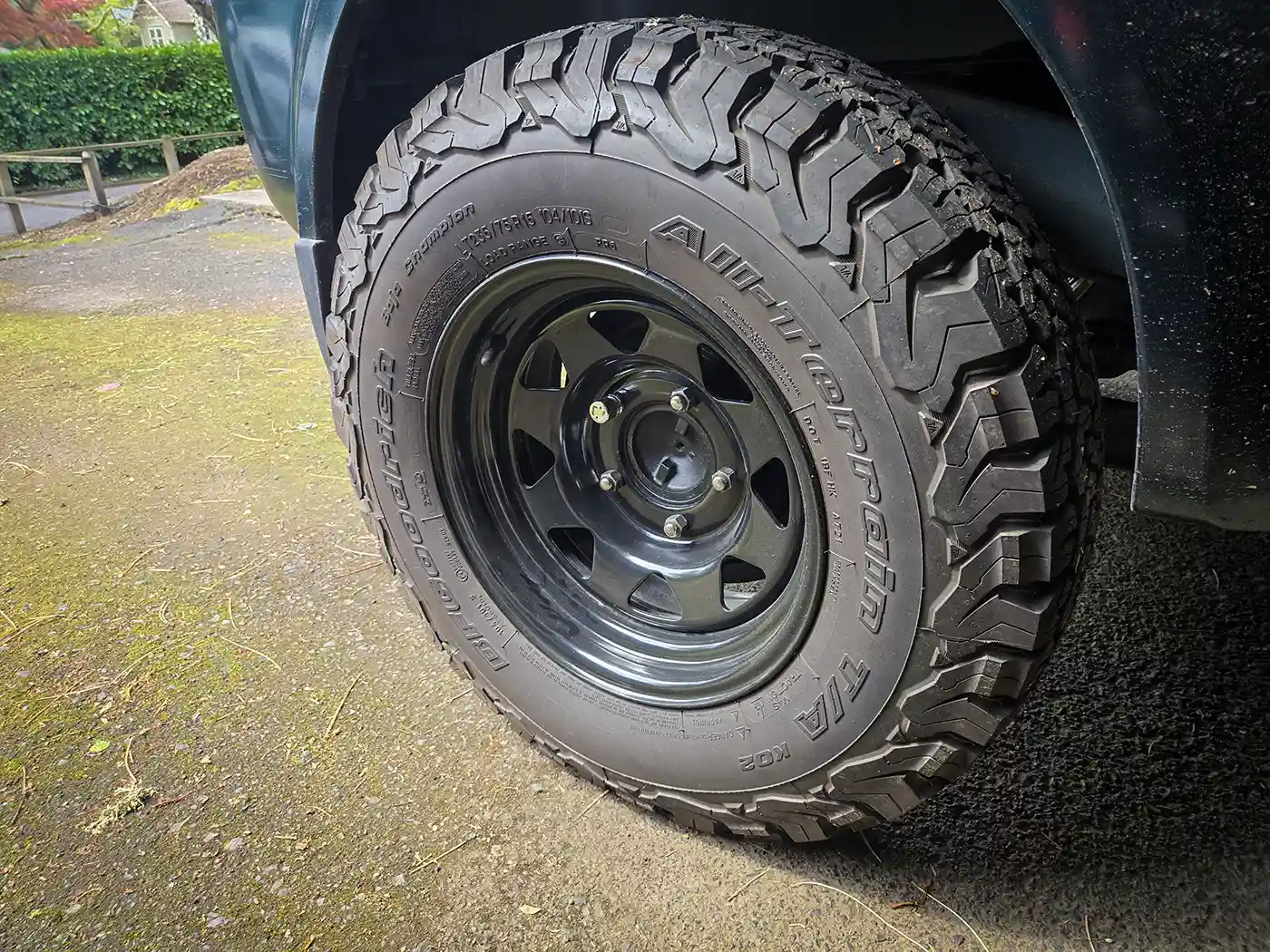
Nothing changes the look of a vehicle more than a set of custom wheels and tires. Our JDM 1998 Suzuki Jimny Wide came with aftermarket steel wheels. They’re all business, however: basic black 15×7 steel wagon-style wheels with a 0 offset. I thought I’d see what I could find if I wanted to replace them. Spoiler alert: There isn’t much, at least not in this part of the world.
A Fairly Rare Bolt Pattern In North America
Like so many Suzuki 4x4s, the Jimny uses a 5×139.7 or 5×5.5 bolt pattern. The factory 15×5.5 wheels have a +5 mm offset and require a 108mm centerbore to clear the manual hubs.
The problem is, this is an old-school wheel size and fitment. Old Fords and Dodge trucks and old Jeeps used this size, as did 1980s and 1990s Suzuki vehicles. This includes the Samurai, Sidekick, X-90, Vitara, Grand Vitara, and XL-7. And of course, the Geo Tracker/Chevrolet Tracker also offered this size. However, it’s been nearly 25 years since any of those vehicles have been made, and there isn’t a huge aftermarket wheel selection for those vehicles (especially in 15″ or 16″ sizes) in North America. And by the way, not all of those OEM Suzuki/GM vehicle wheels will just fit perfectly. Some have much higher +13 to +27 offsets (depending on year, style, and size). I don’t want to monkey around with wheel spacers, either.
Lots of Wheel Choices Outside of the Western Hemisphere
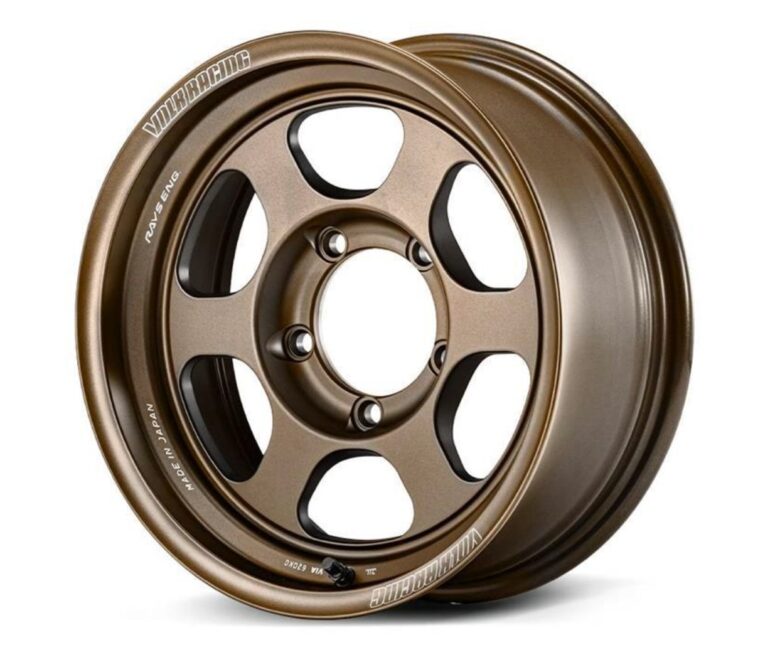
In other parts of the world—especially where the 2019+ Suzuki Jimny is sold (which still uses the 5×139.7 bolt pattern)—you can find lots of wheel choices. So sure, we could import a set of wheels from Europe, Asia, or Australia, but now we’re talking loads of money for shipping, duties, and tariffs.
Every now and then, a set of JDM Suzuki wheels shows up on Facebook Marketplace, eBay Motors, etc. However, 99% of the time, it’s just four. I want a matching spare, so that means acquiring five wheels, not four. I know: picky, picky.
Steel Wheels vs Aluminum Alloys
I can find steel wheels in the specs I want. And I sort of have a soft spot for steel wheels. They’re cheap, unassuming, and utility-focused. But they’re heavy.
Two of our vehicles have steel wheels, two have aluminum. Both have pros and cons. Steel wheels are cheaper, widely available, and weighty. Aluminum wheels are lighterweight, (arguably) more stylish, but expensive (especially for a forged wheel). Conversely, you can whack steel wheels back into round with a hammer if they get bent on the trail (although, for most, that’s unlikely to happen). Then again, you’d need a pretty big hammer. Frankly, I’d prefer aluminum alloys, but steelies are all business.
I am not in love with the classic wagon-wheel-style rollers on our Jimny. I’d love to find something else, frankly. But our options here are just slim for the size and offset we want, especially in aluminum. Optimally, I’d be after either a 15×5.5 to 15×6.5 (or even a 16×5.5 to 16×6) with a +5 to 0 offset. In the USA, that means steelies. For alloys, I’m either going with old Suzuki stock or importing expensive, exotic wheels.
We’ll see what happens, but right now our 235/75R15 BFGoodrich All-Terrain KO2 tires rub badly at full lock, during hard cornering, or with the slightest bit of articulation. Going down to a 215/75R15 size (1.2″ smaller in diameter) might be a good answer, along with another inch of lift. Until then, the fender liners will continue to “self-clearance,” making very bad noises and alarming passersby in parking lots.
Hey, this is all part of the puzzle when owning a rare vehicle in the U.S. We sort of expected this. We’ll see what transpires.

Andy Lilienthal is an award-winning writer and has written professionally since 1999. He has over 15 years in the automotive aftermarket working at companies including Warn Industries, Bushwacker, and Lund International. Editorial works include writing and photography for off-road print magazines, to new-car reviews online. He’s a photographer with images in multiple magazines, blog sites, and The New York Times.
Leave a Reply