
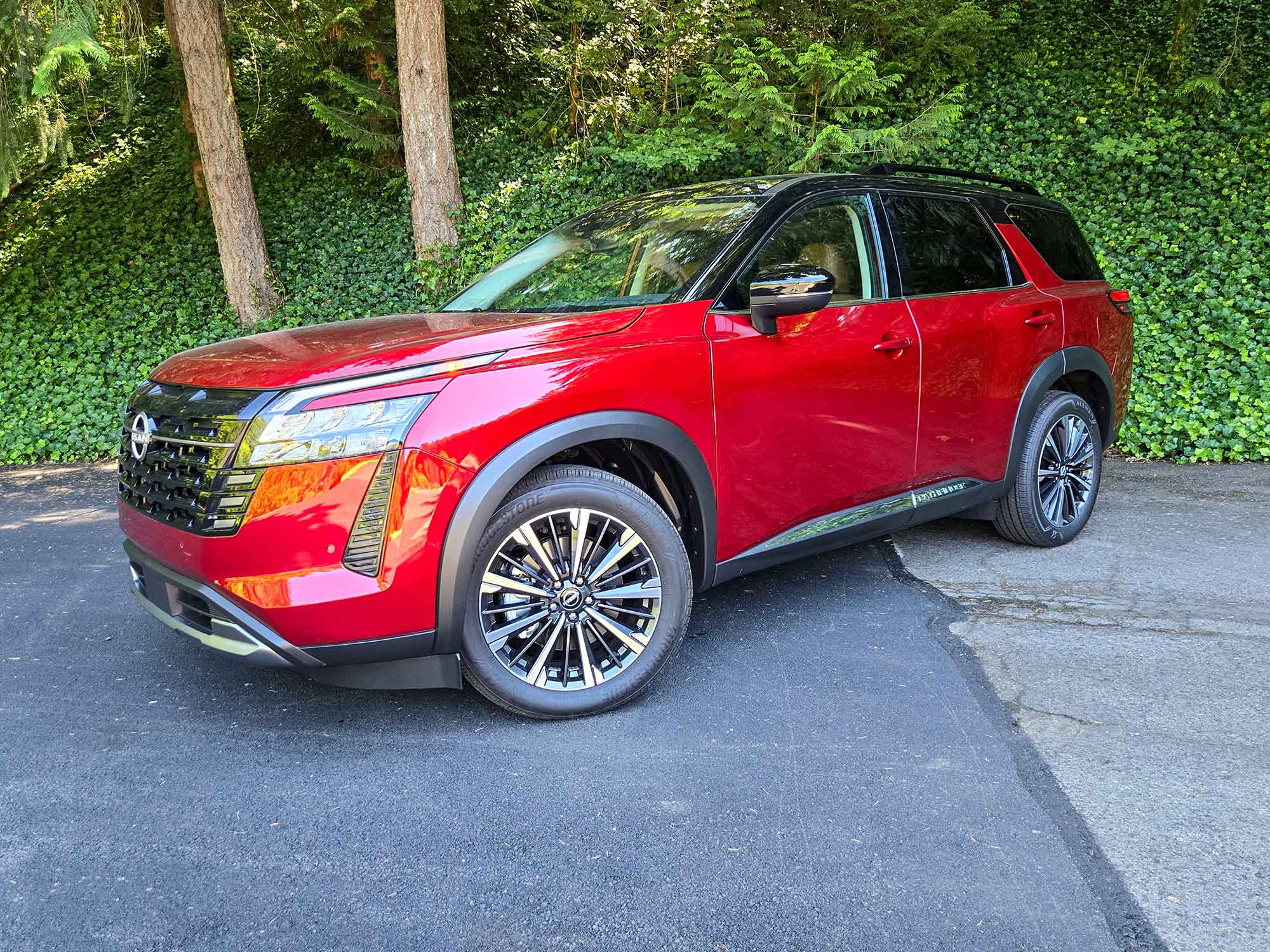
Nissan’s Pathfinder is one of those vehicles that has evolved over time. It started as a scrappy 4×4 with available V6 power, a manual transmission, and a two-speed transfer case. These attributes made it a capable off-roader in the 1980s. But things change, as does the buying public.
The Pathfinder has been in production for 39 years, but has changed significantly. It’s now a seven- or eight- passenger SUV with all-wheel drive and many creature comforts. One thing it has in common with the early Pathfinders? It’s still got V-6 power. This sets it apart from many midsize SUVs that opt for turbocharged four-cylinder mills.
What’s New for 2026?
This fifth-gen Pathfinder was all new in 2021 and shook off its CUV looks for the more rugged styling. For 2026, Nissan offers a refresh with new front-end styling and upgraded tech. The 3.5-liter six-cylinder engine is the only one available, and the Pathfinder Platinum, the top-of-the-line trim, can be had in 2WD or 4WD. Our tester is the 4WD model.
CRANKSHAFT CULTURE CHECKLIST
Off-Road Ability (1-5): 3.0
On-Road Ability (1-5): 3.1
Can You Easily Lift or Lower It: Lift, yes. Lower? Maybe.
Would We Drive Cross Country: Yes.
Would You Drive it to Alaska: Also yes.
Aftermarket Support (1-5): 3.0
Spirit Animal: American Bison – Large and sturdy, powerful, and able to sprint when needed.
Smooth Yet Square Styling
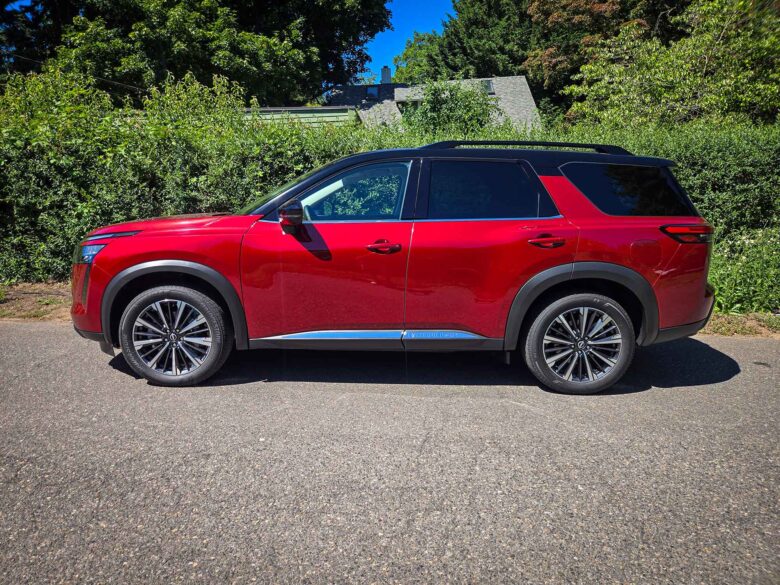
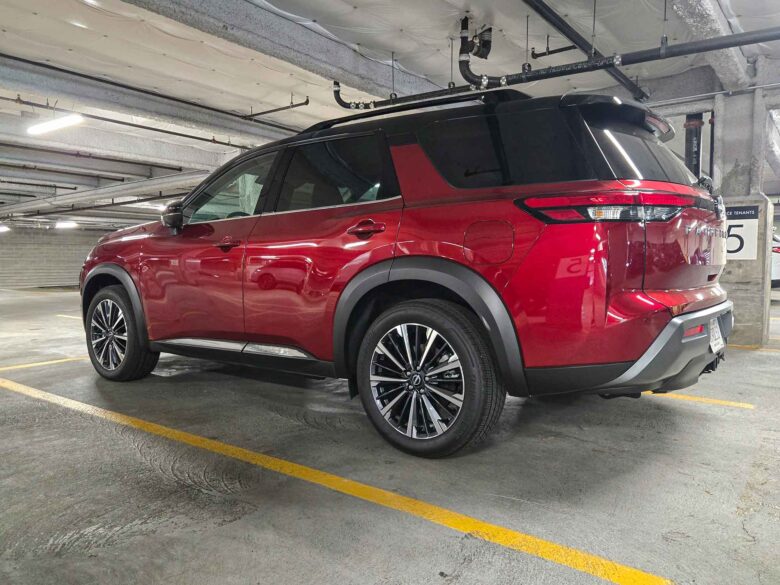
The Pathfinder is no round peg in a square hole: it’s clearly boxy. And this tracks with current SUV/CUV styling trends. It’s a handsome-looking vehicle, although it’s not exactly pushing styling boundaries. The new grille aligns well with much of Nissan’s current design language and looks more modern than the 2021–2025 models.
At the rear, the large rear nameplate and taillights lend an appealing, up-to-date style, which looks good. The semi-floating roof style continues the modern aesthetic. Nissan often offers a two-tone paint scheme option, and that’s the case with Pathfinder. Our tester had the Scarlet Ember Tintcoat/Super Black paint (an optional $1,000), and that red hue is excellent. There are a variety of silver accents throughout, too.
Our Pathfinder Platinum rode on 255/50R20 Bridgestone Alenza Sport A/S tires on premium-looking 20” aluminum alloy wheels.
FYI, the Platinum version is also more focused on luxury, whereas the Rock Creek is the more ruggedized/adventure-oriented model.
The Pathfinder’s Interior: Comfortable and Spacious
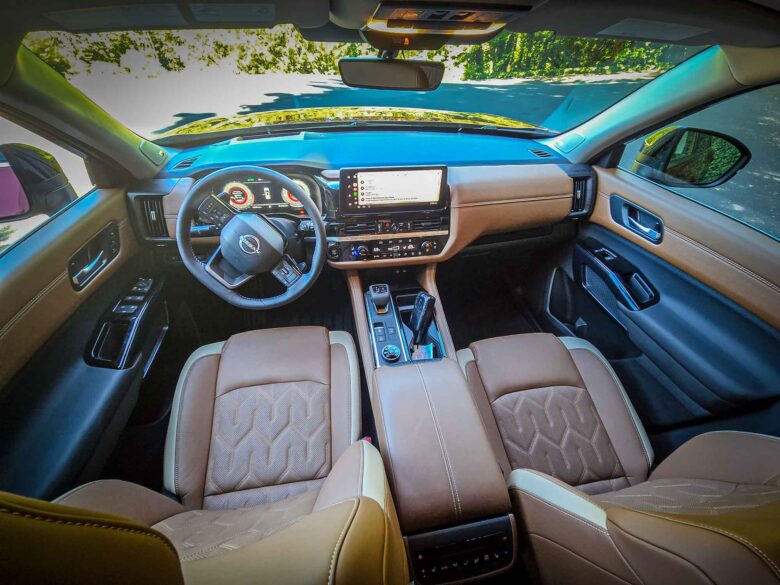
There’s plenty of room inside the 2026 Nissan Pathfinder Platinum. Ours featured a black-and-tan motif that offered a premium look. The interior style doesn’t raise the bar for the segment, but it also doesn’t feel dated.
The front seats are quilted, heated and cooled, wide, and comfortable. The all-digital gauge cluster can be configured in a couple of ways and is generally easy to read. The center screen is 12.3” in size and is pretty easy to use, with one exception.
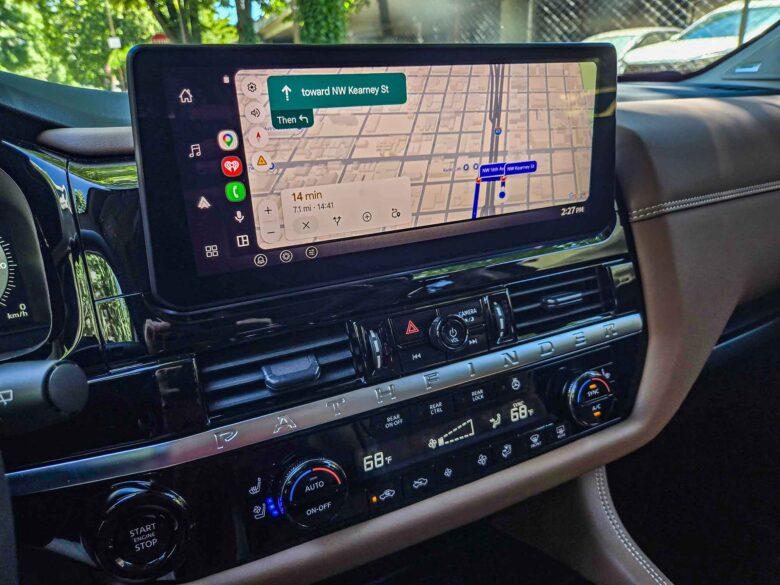
I had issues with the wireless Android Auto. Nearly every time I tried to pair my Samsung Galaxy S24+ phone, it’d stall the system and wouldn’t allow me to connect. I’d have to disconnect, forget the pairing, then reconnect in hopes it’d work. Sometimes it did, sometimes it didn’t. The 13-speaker Bose sound system sounded very good, and the ability to go from Sirius XM to Bluetooth to the Radio was simple. Some automakers make this a chore; Nissan doesn’t.
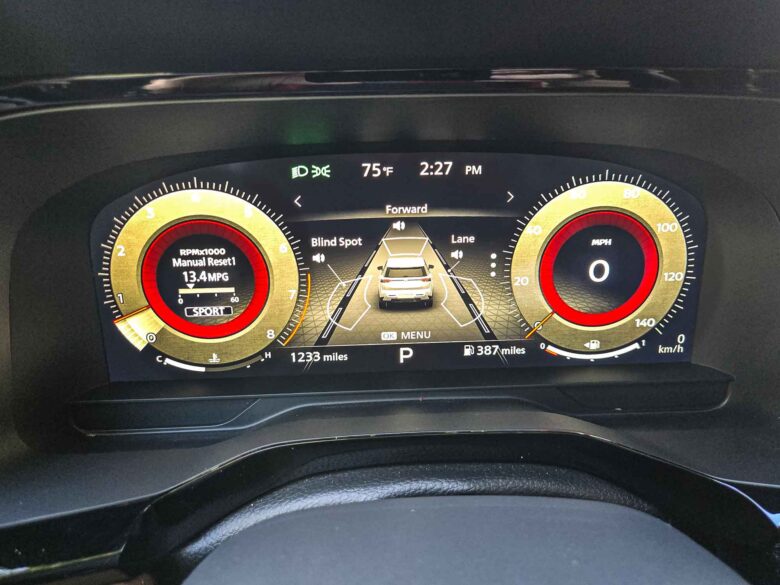
While the Android Auto was a bit finicky, the HVAC was easy to use. No hunting and pecking through menus to turn down the air conditioning or adjust fan speed. Our unit also had a heads-up display, though I promptly disabled as I’m generally not a fan. This Pathfinder had Nissan’s ProPILOT Assist, providing lane keeping and adaptive cruise control among other driving assistance. It does not have ProPILOT Assist 2.1, which offers a hands-free driving experience.
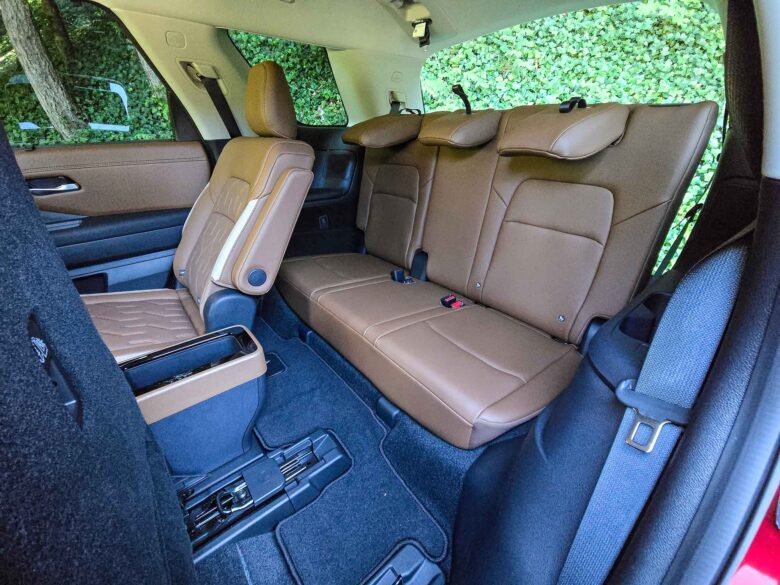
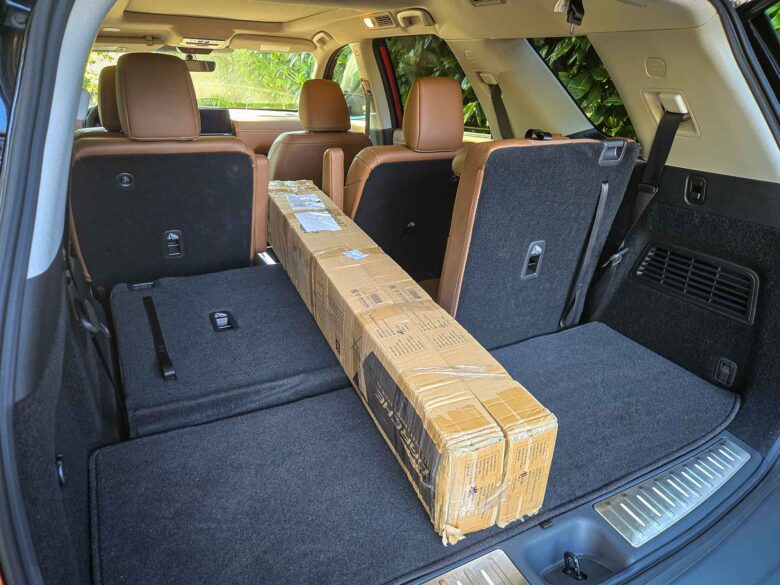
This Pathfinder Platinum was a seven-passenger vehicle with heated middle captain’s chairs, although a middle bench is available. There was a good amount of space for passengers and cargo, especially with the rear seat folded down. The rear doors have window shades, and the vehicle had a large openable moonroof.
Driving and Drive Modes
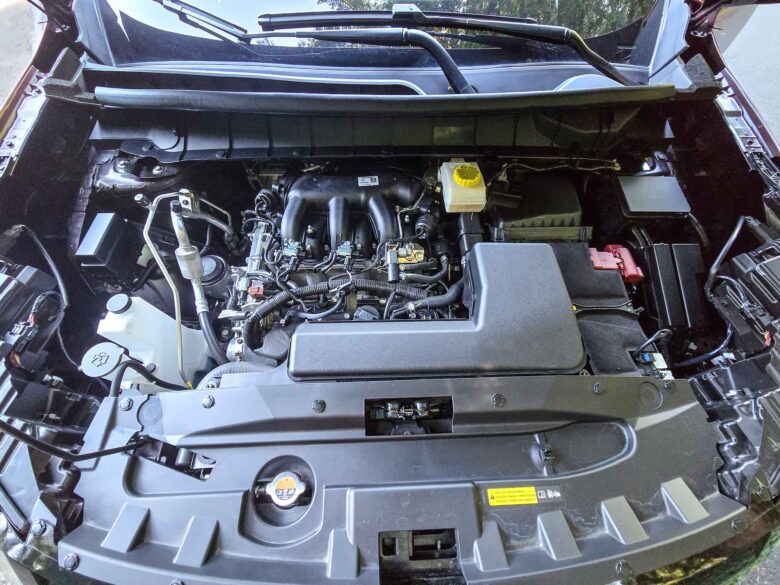
While many SUVs are ditching their six-cylinder engines in favor of turbo fours, the Pathfinder uses a 3.5-liter V-6 making 289 horsepower and 259 lb-ft of torque through a nine-speed automatic transmission. This gives the SUV a good amount of grunt as well as up to 6,000 lbs. of towing capacity. The nine-speed transmission shifts smoothly and works well with the V-6. (FYI, the fourth-gen Pathfinder had a CVT, but that was dropped for 2021.) The transmission offers paddle shifters for manual shifting ability.
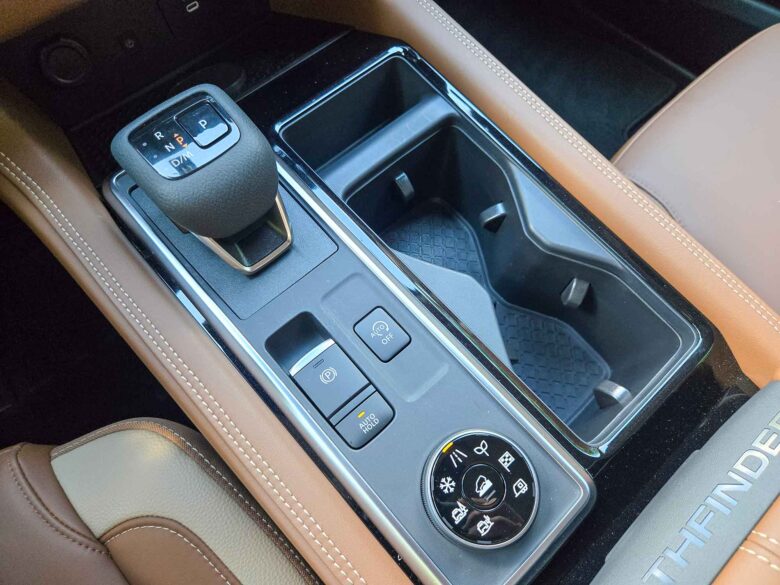
This AWD SUV has a few drive modes including Sport, Eco, Tow, Sand, Mud, and Rut. While I didn’t take this Pathfinder off the pavement, I did use Sport mode, and it significantly increased throttle response and made the most of the V-6’s power. The VQ35DD engine offers good power, making merging and passing easy.
The Pathfinder Platinum is EPA rated at 20 city, 25 highway, and 22 combined MPG, and I observed about 20 MPG during my week with the car, and this is on par with other V-6 models in the segment.
SUVs this large aren’t generally amazing in the corners, and the Pathfinder isn’t an exception. It does, however, feel solid and weighty in all the ways you want a seven-passenger to be. There is a noticeably robust feel, which is a nice quality in a bigger SUV. It also has hill start and descent control should you need them. But around town, it drives easily enough, has plenty of passing power, and is a quiet highway cruiser. Plus there weren’t any egregious rattles. Overall build quality feels tight.
Is the Revised Pathfinder a Contender In the Seven-Passenger Arena?
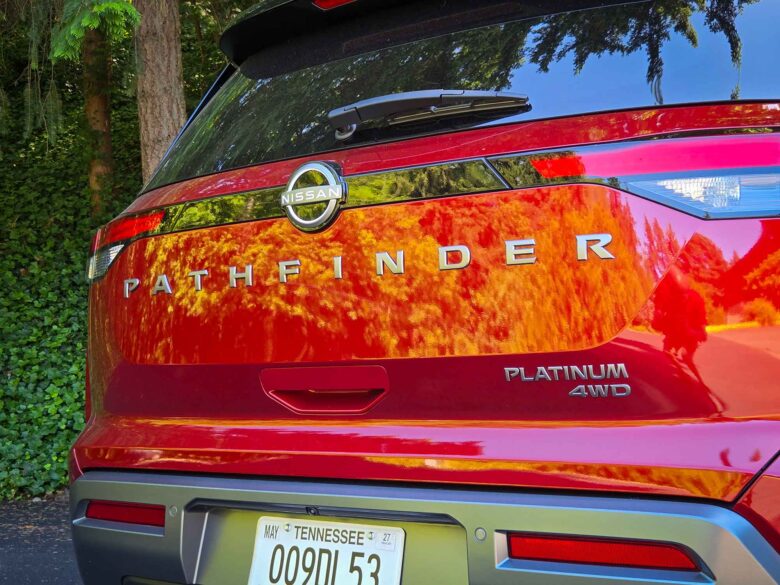
The seven- or eight-passenger SUV market is hotly contested, and most mainstream automakers have an entry in the segment. The Pathfinder is essentially a refresh of a five-year-old design, and that’s not unheard of in the automotive industry. But there are a few standout vehicles in this segment, and six-cylinder choices are becoming rarer. If you really want six pistons and no turbo, your options are the Honda Pilot, Jeep Grand Cherokee, and Dodge Durango (which has body-on-frame construction).
This fully loaded Pathfinder Platinum had an MSRP of $56,835. A similarly equipped Honda Pilot Black Edition is about $300 more. A loaded Grand Cherokee Summit is going to be over $60,000. The more trucklike Durango GT Plus AWD (with the V-6) is about $5,000 less, but other than the fact It has a V-6, it’s quite different than a Pathfinder. Nissan’s secret weapon is usually the ability to offer its cars for less cash than the competition, and the Pathfinder Platinum does that, but not to the extent some of its other models do. That being said, you get a lot for your dough here.
While it might not feel or look like the newest SUV on the market, it’s a solid, comfortable vehicle with multi-mode AWD and V-6 grunt. It’s handsome enough and offers plenty of space. Then again, so do most SUVs. But if you want a naturally aspirated V-6, seven-to-eight-passenger ability, your options are limited. The Honda Passport is a very good choice, but the Pathfinder is still worth a look, even if it’s not the most exciting or modern choice out there.

Andy Lilienthal is an award-winning writer and has written professionally since 1999. He has over 15 years in the automotive aftermarket working at companies including Warn Industries, Bushwacker, and Lund International. Editorial works include writing and photography for off-road print magazines, to new-car reviews online. He’s a photographer with images in multiple magazines, blog sites, and The New York Times.
Leave a Reply