
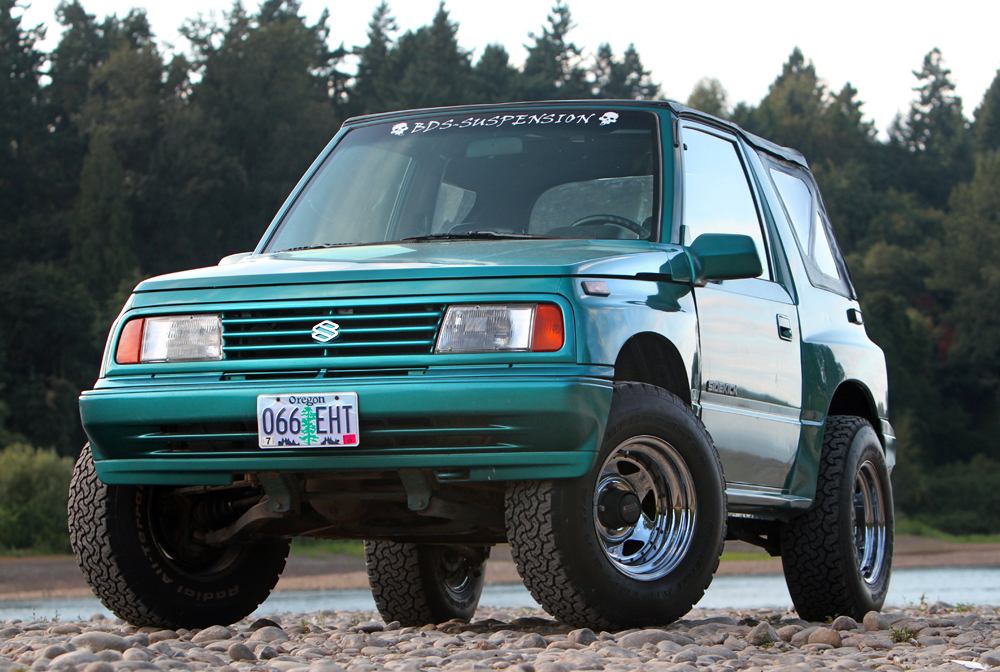
About 15 years ago, we purchased our first 4×4, a 1995 Suzuki Sidekick affectionately known as the Teal Terror. It had loads of potential, but needed some TLC. For example, it came with terrible old tires that needed replacing. I wanted all-terrain tires and found a used set of BFGoodrich All-Terrain T/A tires at a local used tire shop. They’d be much less expensive than new tires, so I figured, why not try used tires?
Saving Money On Used Tires
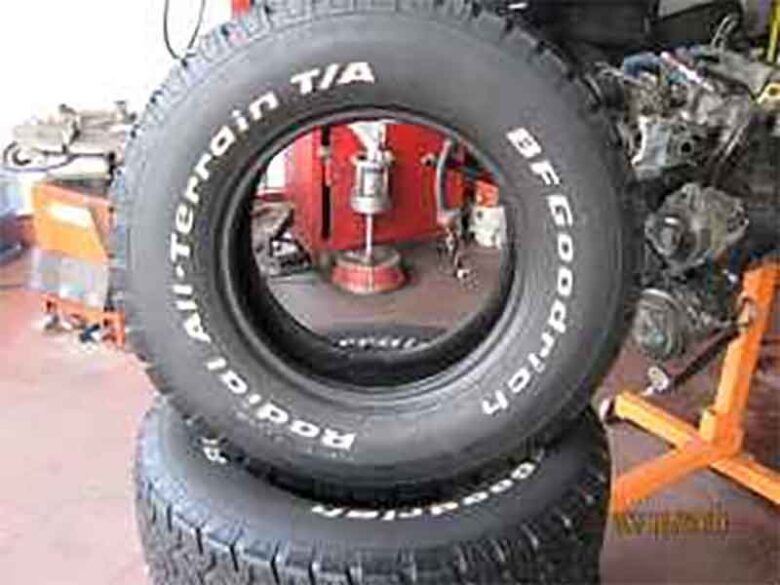
This Suzuki Sidekick was a cheap project car. We bought it for about $1,800, and it needed a lot of love. Being on a tight budget, I tried to get used parts when I could. So when it came time to upsize from the stock worn-out 205/75/15 to a bigger set of 235/75/15 all-terrains, I thought I’d go used.
Back then, Craigslist was the place to look for parts. I eventually found a set of four used BFGoodrich Radial All-Terrain T/A tires in the right size. The photo showed them stacked up neatly and glistening with tire shine. How much? $125 for all four. Cheap? Yes. A good deal? Well, I swear there’s a saying about “too good to be true,” but back then I was bamboozled by the low-buck price.
I showed up at a service station, and there were the tires. They could’ve been in a Soul Glo commercial; they were so wet with tire dressing. I quickly looked them over, having never bought used all-terrain tires. I mean, they looked good. The blocky tread did appear somewhat chewed up, but hey, for $125, what do I have to lose, right? I mean it’s not like bad tires could be DANGEROUS or anything …
I do the deed and load the four tires in the car. Later, I found some chrome 15×8 steel wheels that came off a Ford Bronco. I couldn’t wait to get my second-hand setup on the road.
Balancing Issues = Bad Vibes
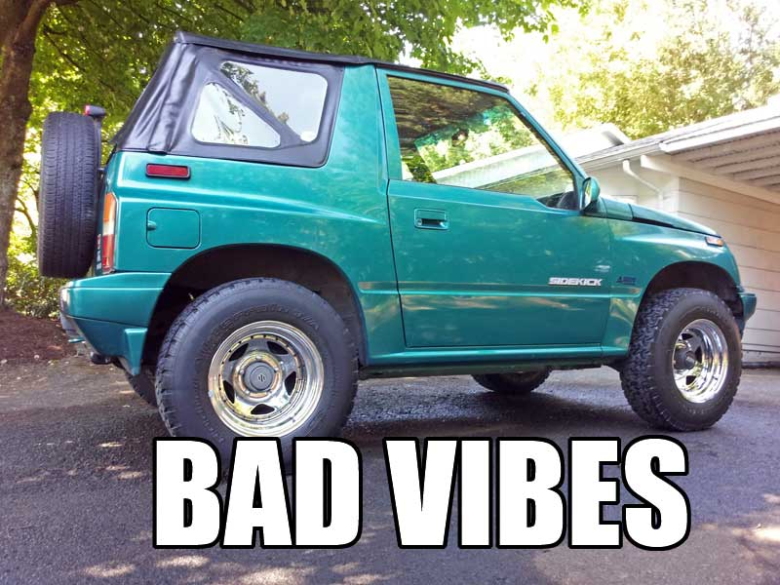
While usually a Discount Tire guy, I opted to go to another tire chain. They mounted and balanced the setup and threw them on the Sidekick. The new-to-me setup looked so much better than the stock wheels and horrible old tires.
The next day I hopped on the highway to get to work, and the little SUV produced some very bad vibrations at 60 MPH. What the hell? These were just balanced! I returned to the tire shop later that week and had the tires rebalanced. I hit the highway again, and there were more vibrations. Perhaps one of these chrome steel wheels is bent? I decided I should rotate the tires. That didn’t help either. Is an axle bad? Maybe a U-joint or driveshaft?
The Culprit: The Old Tires
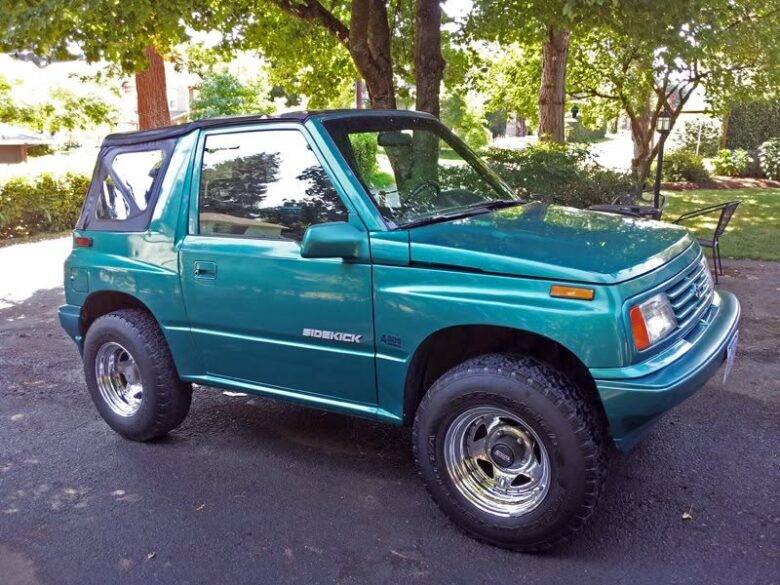
Unsure of what the root cause of my bad vibes were, I became concerned that I’m going to need to sink a lot more cash into the Suzuki. I opt to go to my usual Discount Tire location for a second opinion on the tires.
I walk in and explain my balancing issue. As their employees always do, they want to look at the tires before they do anything.
We walk to the Teal Terror and the employee kneels down to look at the tire. Within seconds he says, “Do you know how old the tires are?
“Noooooo …” I said slowly.
“They’re 23 years old,” he remarks. “We can’t legally touch them.”
In fact, Discount Tire won’t service tires (including balancing) older than 10 years, and these were more than double that. Damn it.
How To Read BFGoodrich Date Codes
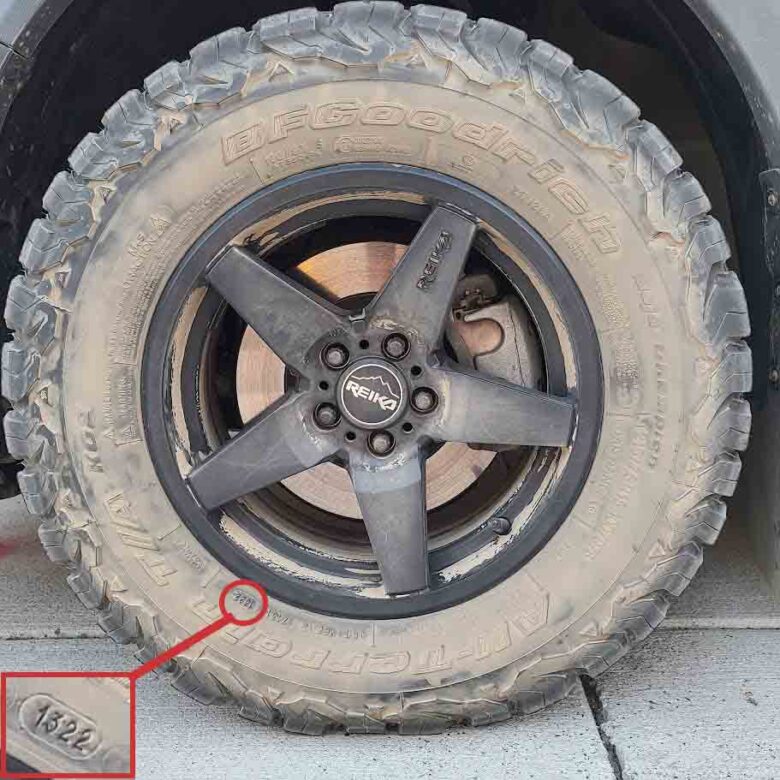
The employee showed me how to read a modern BFGoodrich date code. There are four numbers listed on the sidewall, usually inside of an oval. Let’s say those say “1322,” such as the tire in this photo. This means the tires were made during the 13th week of the year 2022. This would’ve been late March of 2022. It’s that simple. Note: BFGoodrich usually only puts the date code on one side of the tire.
I called my wife from Discount Tire, and we agreed to buy a new set of tires. Not cheap, but much safer and more comfortable. Unfortunately, I was out the $125 on my shiny, ancient rubber. Lesson learned.
Stay Away From Old Tires
Buying used tires isn’t a no-no. But there are some things to take into consideration. Even if you don’t see a date code on the tires (not all brands have one), inspect them for dry rot, cracks, uneven wear, or chewed-up tread. All of these things can signal a lack of maintenance, poor wear, or old age (especially the cracking/dry rot).
Tires are the only thing between you and the road or trail, and they should be looked at as a safety feature. However, knowing what you’re getting into with used tires can be the difference between saving some cash, and ending up in an unsafe situation.

Andy Lilienthal is an award-winning writer and has written professionally since 1999. He has over 15 years in the automotive aftermarket working at companies including Warn Industries, Bushwacker, and Lund International. Editorial works include writing and photography for off-road print magazines, to new-car reviews online. He’s a photographer with images in multiple magazines, blog sites, and The New York Times.

Leave a Reply