
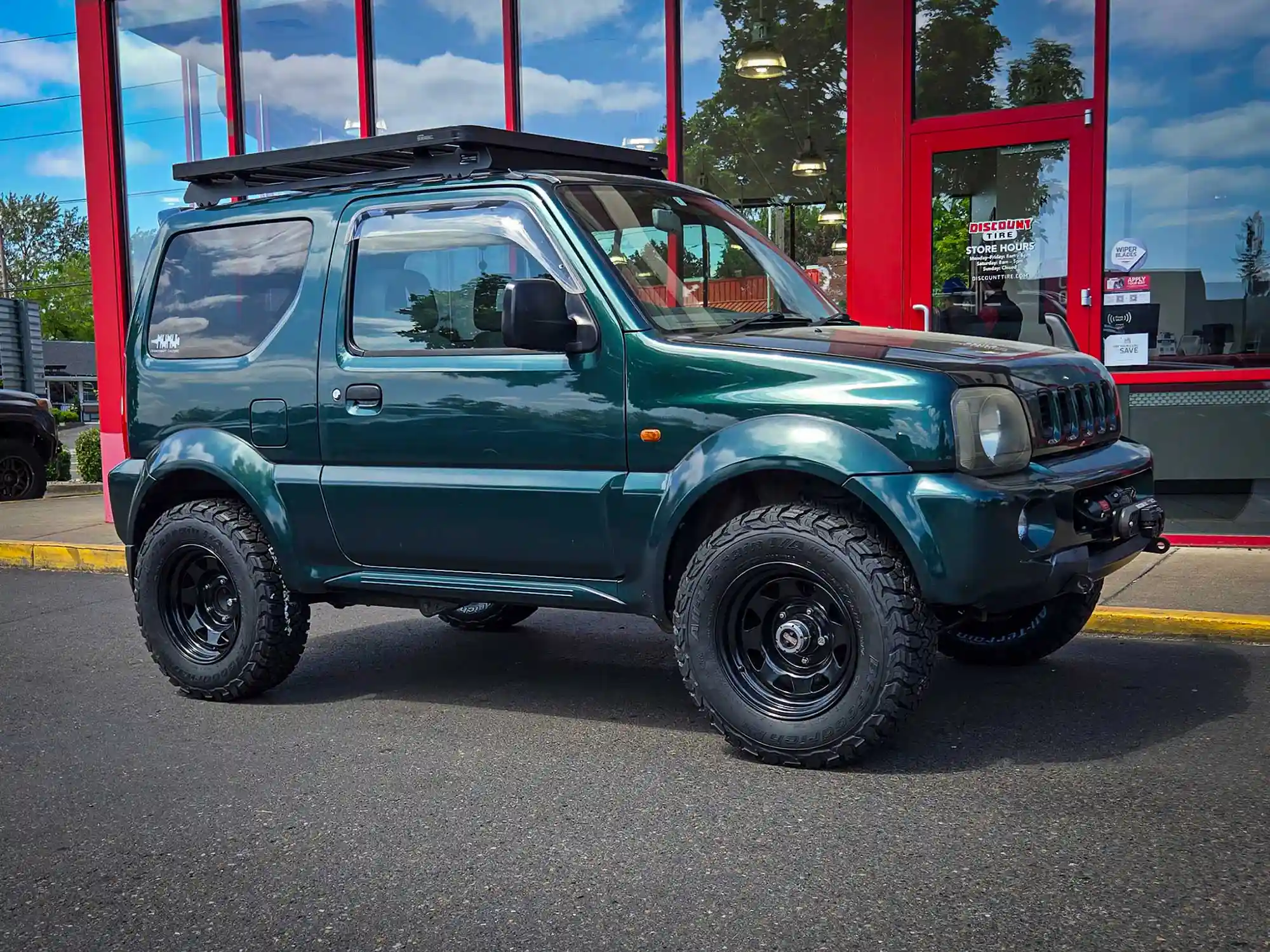
Our 1998 Suzuki Jimny Wide came with a nearly new set of BFGoodrich All-Terrain KO2 tires in 235/75/15. This was a definite plus when buying the little JDM SUV. However, what looked like a great thing at first turned into a bit of an issue.
Too-Big Tires Troubles
We’re big fans of BFGoodrich tires, and we’ve run their all-terrain KO2 tires on three vehicles: Our 1994 Mitsubishi Delica, our 2022 Subaru Crosstrek, and this Jimny. The issue wasn’t with the tires themselves, but rather the size. While the 235s fit in the wee little wheelwells, they rubbed badly at full lock, under hard cornering, or with even the slightest articulation. Granted, they’re on aftermarket 15×7 (et 0) Jimny Bits steel wheels, but still. They made a horrible sound, which grabbed the wrong kind of attention. It was often followed my me yelling out, “It’s OK; they’re self-clearancing.”
I did lots of research on what others around the world were using on their Jimnys. It’s generally thought that 1998-2018 Suzuki Jimny 4x4s can go with a 215/75/15 as the largest tire without rubbing issues. To successfully run the 235s, there needs to be some bumper and fender liner trimming and massaging. But the rubbing is just the first issue.
Bigger Tires Can Mean Reduced Performance
The other problem is how the 235/75/15 tire affects the performance. A larger tire on the Jimny’s factory 3.909 gears robs performance. After all, the factory tire size is a teeny 205/70/15, about 10% smaller than the 235s our Jimny came with. Acceleration, low-range gearing, ride, and handling were all impacted by the 235s. The only real benefit? A bit more ground clearance. Also remember: Our Jimny only has a 1.3-liter engine, making 80 HP if we’re lucky.
215s To The Rescue
After lots of research, we opted to make the switch to a smaller 215/75/15 tire. These are actually the exact same tires we run on our 2022 Subaru Crosstrek, so we already knew we liked them. Yes, we’d lose 1.2″ of clearance under the axles, but we aren’t building a rock crawler, rather a miniature adventure vehicle, so we can stand to lose the height.
A few days ago, we had the new KO3s installed, and they still look great. Additionally, all the benefits I read about online were true. It rides better, accelerates quicker, doesn’t wander as much on the highway, and the rubbing is 100% gone. We noticed our RPM on the highway are higher due to the smaller tire size. At about 65 MPH, we’re spinning around 3,900 RPM, which is a couple of hundred more than with the 235s. But you know what? It’ a small price to pay for increased drivability. Plus, this little rig won’t be a highway cruiser very often.
Properly Mounting and Balancing BFGoodrich Tires
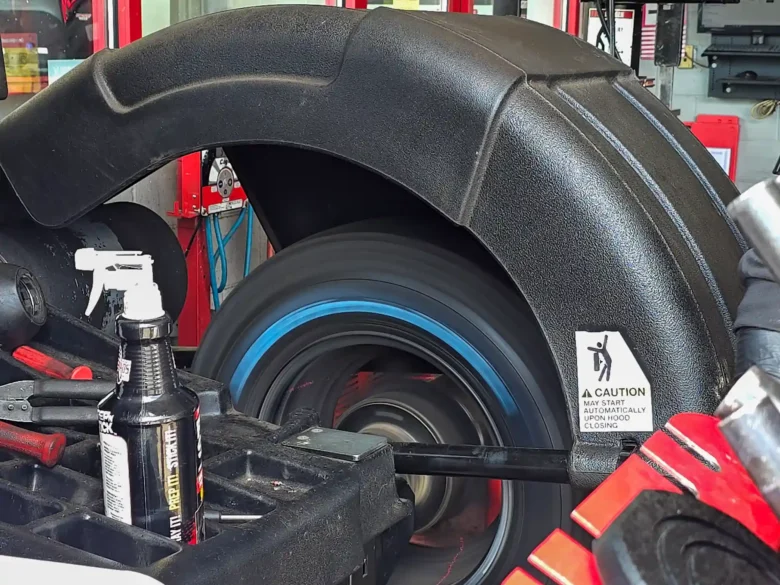
The folks at BFGoodrich and I were talking about these tires recently. Interestingly, they said they sometimes get complaints about balancing issues with the KO3. They highlighted the importance of proper mounting and balancing. Specifically:
- BFGoodrich designs its off-road tires with tighter beads to prevent unseating, especially when tires are aired down. Because of this feature, problems might arise if the tires aren’t seated properly.
- To combat that, BFGoodrich suggests lubricating both the tire and the wheel during mounting, according to the USTMA (U.S. Tire Manufacturers Association) recommended mounting procedure.
- When mounting, the installer should use approved bead lubricant and thoroughly lubricate the entire bead seat area of the wheel and then the top bead and rim flange area. Afterward, fully deflate and inflate the tire for the best results.
- Sometimes, balancing issues arise with aftermarket wheels due to their design or placement of weights.
You can learn more about this in this video from BFGoodrich:
Luckily, our tires balanced out without issue.
We’re excited to have fresh KO3s installed and to get more miles on our little green machine. We’ve still got lots of plans for the Jimny, and can’t wait for its next adventure.

Andy Lilienthal is an award-winning writer and has written professionally since 1999. He has over 15 years in the automotive aftermarket working at companies including Warn Industries, Bushwacker, and Lund International. Editorial works include writing and photography for off-road print magazines, to new-car reviews online. He’s a photographer with images in multiple magazines, blog sites, and The New York Times.

Leave a Reply